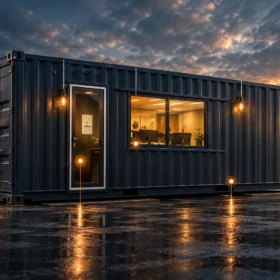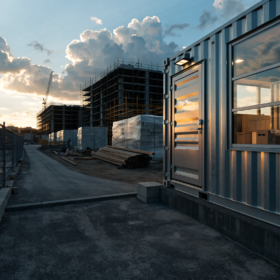
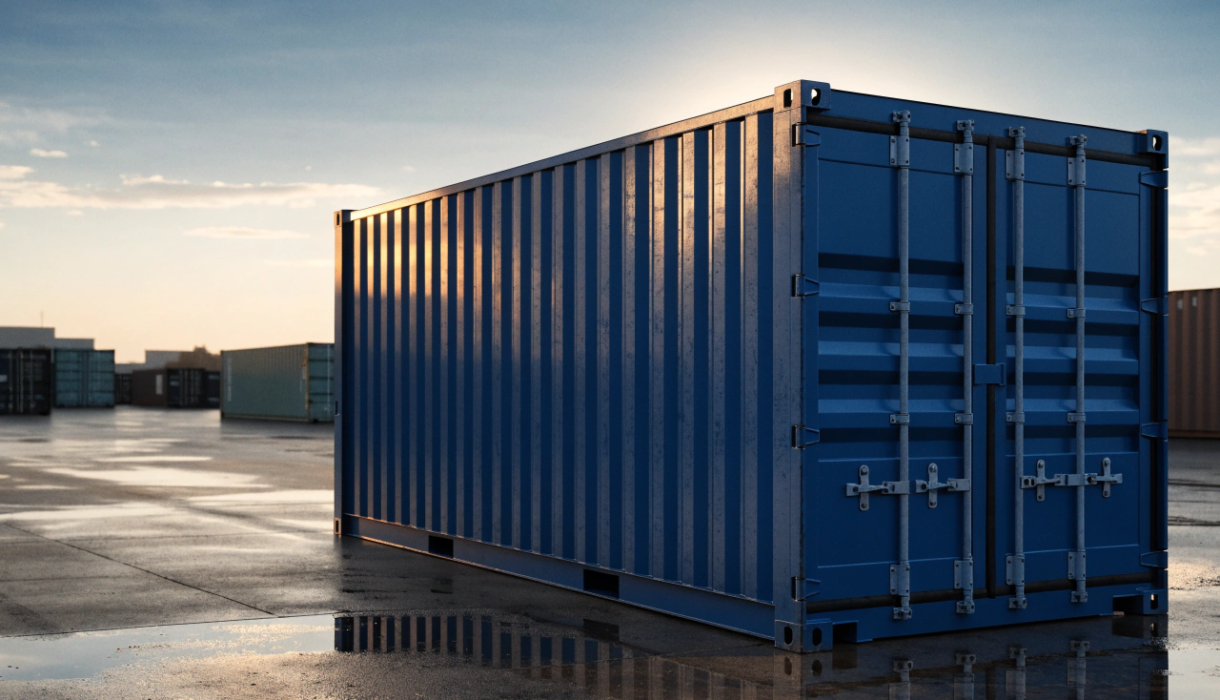

Are container storage units actually good for storage?
Yes, for most goods. Container storage units are dry, secure and cheap per cubic metre, provided you manage airflow and sit them on firm ground.
We sell new, used and modified containers across Europe, and storage is by far the most common use our customers have for them. The real caveats are condensation, climate control and ground conditions. Get those right and a container holds your stock, tools or machinery for decades.
What is a shipping container actually made of?
It is a welded box of Corten weathering steel, built to fixed ISO dimensions, and tested at the factory to stay watertight in ocean conditions.
The steel is the point. Corten weathering steel forms a tight oxide layer that slows further corrosion, which is why a box that spent ten years at sea is usually still sound. External sizes follow the ISO 668 standard, so every unit stacks and locks the same way.
- 20ft: 6.06 m long, 2.44 m wide, 2.59 m high externally, roughly 33 cubic metres inside.
- 40ft: 12.19 m long, same width and height, roughly 67 cubic metres inside.
- High cube: adds about 30 cm of internal height, useful for tall pallets and racking.
The doors seal on rubber gaskets and lock with four vertical bars. Full sizes are in our guide to shipping container dimensions.
Why do container storage units suit storage so well?
They are weatherproof from day one, they lock hard, they need no foundations, and they can be moved again later if your site or business changes.
A container arrives finished. It is dropped, levelled and used the same afternoon.
- Weather: built for spray, rain and salt air.
- Security: heavy steel, no windows, and a lock box can be welded over the padlock.
- Cost per cubic metre: nothing else gives 33 dry cubic metres this cheaply.
- Ownership: it is your asset, and used units hold value well.
- Portability: a hook lift or crane moves it to a new yard in a day.
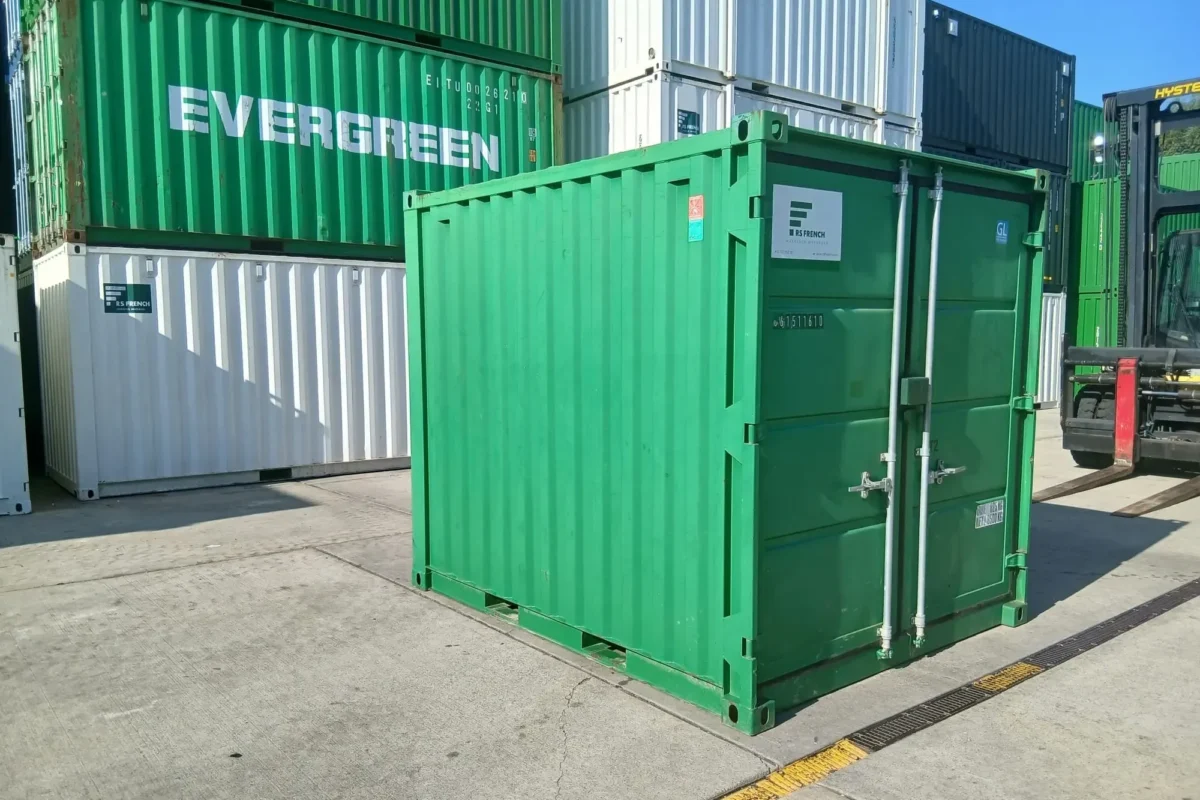
How do you stop condensation inside a container?
Ventilate it, lift the contents off the floor, add desiccant, and never load anything damp. Condensation forms on cold steel, not from leaks.
People blame the container when the moisture was usually loaded in with the goods. Warm humid air enters, the steel roof cools overnight, and water forms underneath and drips. Hence the phrase “container rain”.
- Ventilation: factory vents are the minimum. Extra louvre vents high and low create cross flow.
- Raised storage: pallets or battens keep boxes off the floor and let air move underneath.
- Desiccant: hanging moisture absorbers are cheap and effective.
- Dry loading: never store damp timber, wet fabric or anything still curing.
- Insulation: closed cell foam on the ceiling stops the surface reaching dew point.
For valuable stock we recommend insulation and extra vents together, the one modification that takes a unit from adequate to genuinely dry.
What should you not store in a shipping container?
Anything needing stable temperature or humidity, plus regulated goods. Unheated steel swings from below freezing to over 40 °C inside.
- Wine and spirits: temperature swing ruins them.
- Sensitive electronics: batteries, screens and media degrade with heat cycling and humidity.
- Paper archives and artwork: possible, but only in an insulated, ventilated unit.
- Fuels and chemicals: subject to national storage rules, bunding and fire separation distances.
- Anything living: a sealed steel box is not suitable.
If you need stable conditions, ask us about insulated or climate controlled builds.
How do container storage units compare with self storage or a steel shed?
A container is a one off purchase you own and control. Self storage is a monthly rent with limited access. A shed costs more to build.
Against rented self storage: a rented unit needs no site work, but you pay monthly forever, opening hours restrict access, and you cannot park a forklift beside it. A container usually pays for itself within two to three years of equivalent rental.
Against a steel shed: a shed can be bigger and configured freely, but it needs a slab, groundworks, a build programme and often planning consent. A container needs none of that.
On price: in 2026 a used 20ft wind and watertight unit typically sells for 1,500 to 2,500 euros, and a new 20ft typically runs 3,000 to 4,500 euros. Prices vary by condition, location and transport distance, so treat those as orientation. Our comparison of new versus used containers explains which grade suits which job.
What ground and access does a container need?
Firm level ground under the four corner castings, with drainage away from the doors and clear access for a delivery lorry.
A container carries its whole weight on the corner castings. It needs no slab, but those four points must not sink. Concrete pads, railway sleepers or heavy paving slabs are the normal solution.
- Level: an out of level container has doors that will not close, the most common complaint we hear.
- Raised: lifting the base clear of standing water keeps the floor bearers dry.
- Drainage: never place a unit in a dip. Water against the doors finds its way in.
- Access: a 20ft delivery needs roughly 20 m of straight clear approach, a 40ft more.
See our guide to preparing your site for container delivery.
What size container do I need?
A 20ft suits most businesses and holds 11 Euro pallets in one layer. Choose 40ft only if you have the space and the volume.
Loading capacity is the useful measure. A 20ft takes up to 11 Euro pallets (1.2 by 0.8 m) in one layer, or 9 to 10 industrial pallets (1.2 by 1.0 m). A 40ft roughly doubles that.
Two 20ft units often beat one 40ft: two door ends, separated stock, and they fit where a 12 m unit will not.
What else do buyers ask about container storage?
These are the four questions our customers raise most often before buying a storage container for a yard, a farm or a working site.
Is a used container watertight enough for storage?
Yes. Wind and watertight is the working grade for static storage: dry inside with sound doors and seals, though it will show surface rust, dents and old paint. Cargo worthy is the higher grade needed to ship again, and it carries a valid CSC safety plate.
How long will a container last as a storage unit?
A used wind and watertight unit on decent ground commonly gives 15 to 25 years. Clearing standing water off the roof and touching up paint damage extends that.
Do I need planning permission?
Rules differ by country and municipality. A container on a working yard or farm is usually treated differently from a permanent structure in a garden. Check locally before delivery.
Can a container be modified for storage?
Yes. Personnel doors, roller shutters, extra vents, insulation, lighting, power and shelving are standard work. Tell us what you store and we will specify the build.
Last updated: September 2026
Send us your requirement, the size, the delivery location and what you intend to store, and we will come back with a written quotation. Browse our containers and request a quotation.