

Office Container vs Modified Container: Which Do You Actually Need?
Posted in :

Office Container vs Modified Container comes down to one question: do you need a finished workspace off the shelf, or a container changed to fit a job that nothing standard covers?
Buyers who need a container to work in rather than store things in usually hit the same fork in the road: is this an office container, or is it a modified container? The two overlap enough to be confusing and differ enough that picking wrong costs you either money or usefulness.
Here is the distinction in one line, and then the detail.
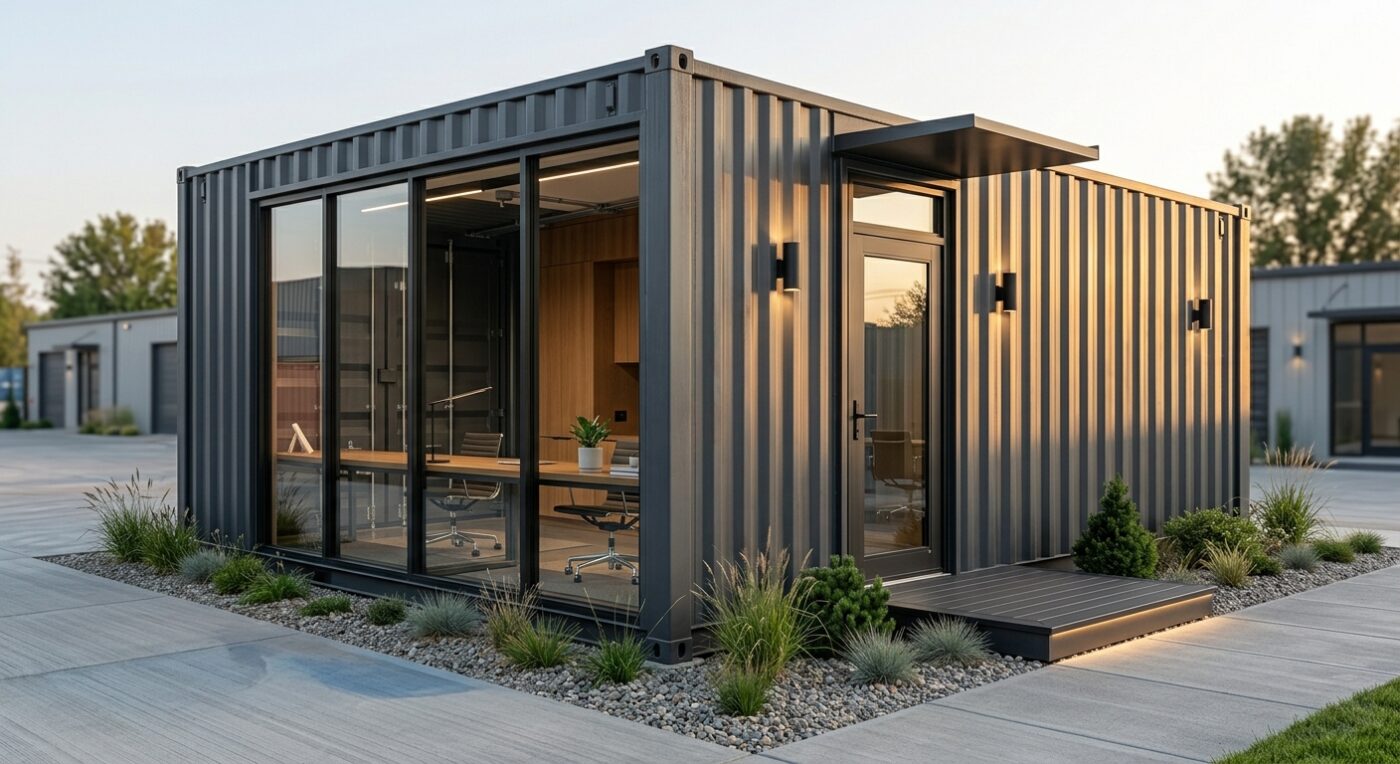
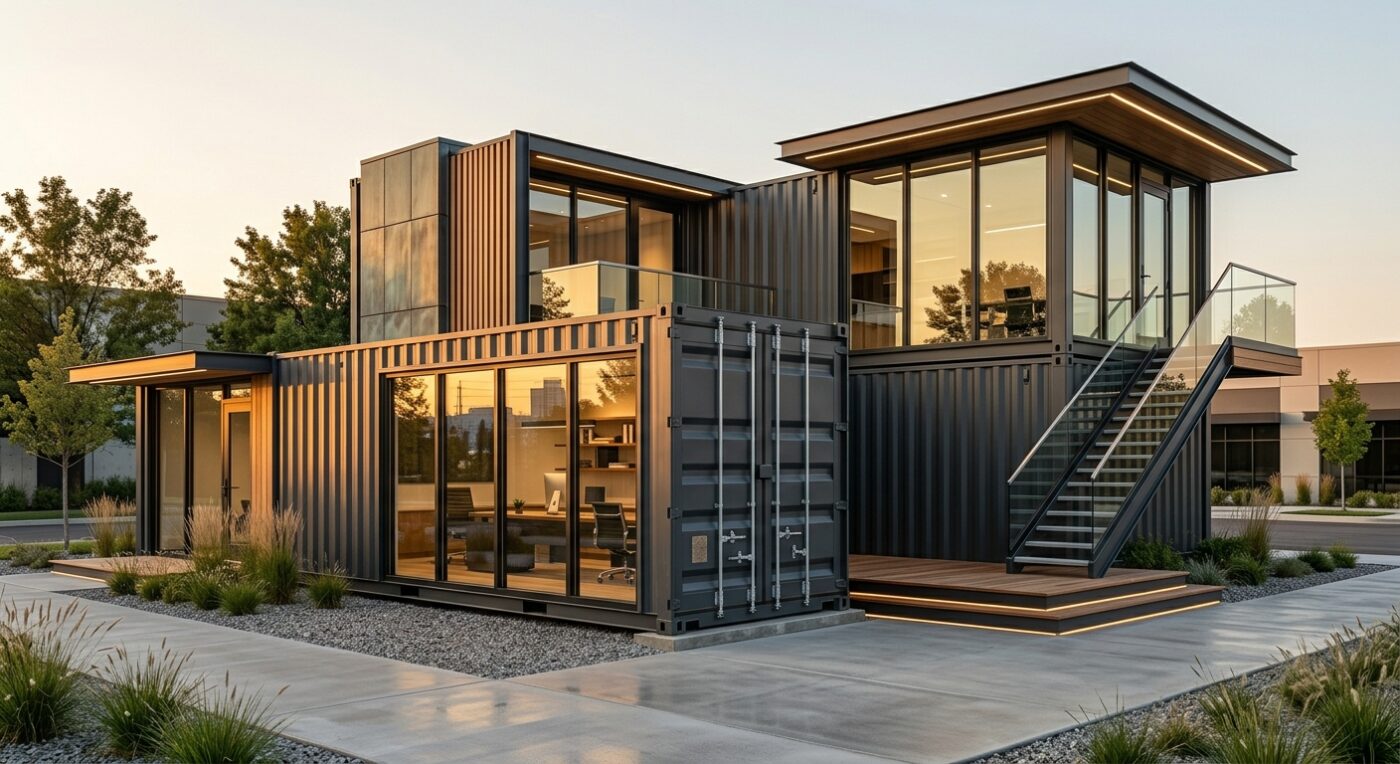
An office container is a workspace-ready unit you use largely as supplied. A modified container is a shipping container changed to suit a job that a standard unit would not do well.
The case for an office container
Office containers exist because a very common requirement keeps repeating itself: somewhere on site for people to work. A desk or two, a door that shuts, light, and separation from the noise and weather outside.
Because that requirement repeats, it can be met with a unit that is already set up for it. You are buying something understood rather than something invented, which generally means a shorter lead time, a more predictable cost and fewer decisions to make.
Choose this route when your need is recognisably “an office on a site” and you have no strong opinions about exactly where the window goes. Typical fits: a project office on a construction compound, supervision space on a yard or plant, welfare and meeting space, satellite admin space for a commercial operator.
The case for a modified container
Modification is the right answer when the specific arrangement of the space is the point.
Some signals that you are in modification territory:
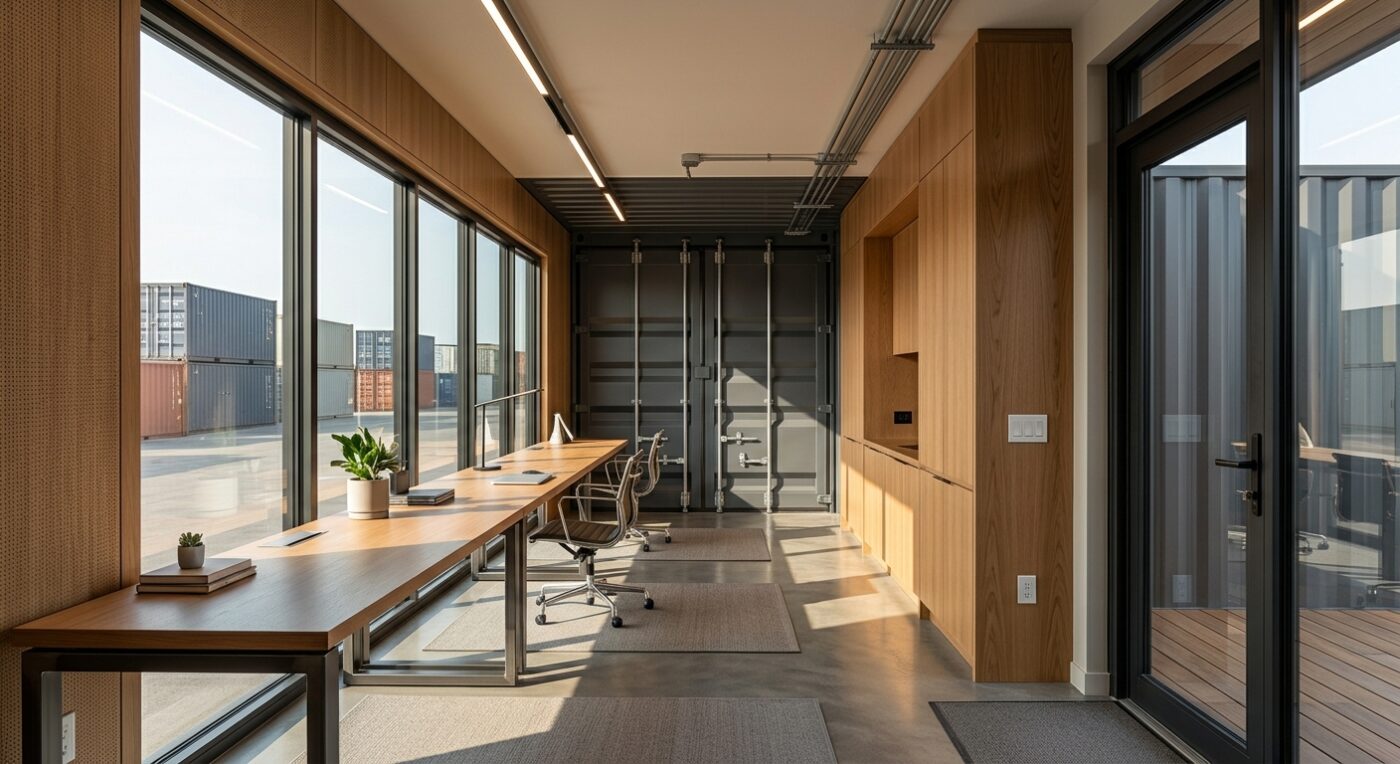
- The openings matter. You need a door on the long side, a roller shutter, a serving hatch, or windows positioned for a view or a workflow rather than wherever they usually go.
- The inside needs dividing. Two rooms, a store at one end, a separate technical space, a washroom.
- It is not really an office. A workshop with benches, a retail or hospitality unit, a plant room, a specialist facility.
- It has to match something. An existing building, a site aesthetic, a brand, a planning condition.
- It connects to services in a particular way. Where power, water and drainage enter is a design decision, not an afterthought.
If two or more of those apply, adapting a standard unit is usually a false economy. You end up paying twice: once for the unit and again for the compromises.
The honest middle ground
Plenty of requirements sit between the two, and that is fine. A light modification to an otherwise standard office unit — an extra window, a partition, a different door position — is a normal and sensible purchase. You do not have to pick a side.
What matters is that you describe the finished thing rather than the starting point. “A site office for four people with a separate lockable store at one end” tells a supplier everything. “An office container, modified” tells them almost nothing.
Questions to answer before you enquire
- How many people use it at once, and what are they doing in there?
- Does anything need to come in or out that will not fit through a normal door?
- What services are available at the location, and where do they arrive?
- Does it need to be relocatable afterwards?
- Is there anything the space has to comply with — site rules, a planning condition, a client standard?
Further reading
- ISO 668:2020, the standard that fixes container classification, dimensions and ratings (ISO)
- The key ISO container standards, summarised (Bureau International des Containers)
A word on cost
People often assume modified means expensive and office means cheap. It is not that clean. A heavily specified office unit can cost more than a light modification, and a simple modification to solve one specific problem can be very good value.
The reliable rule is different: pay for the things that are painful to change later. Openings, layout and services are painful. Paint and fittings are not.
Not sure which side of the line you are on? Describe the job and we will tell you honestly — including when a standard office unit will do the job and a modification would just be spending.
Office Container vs Modified Container: the short answer
Buy an office container when you need desks, light, power and heat in a known layout. Order a modified container when the use is specific, the layout is yours, and a standard office box will not do the job. Tell us the use, the headcount and the site, and we will say which one fits.