
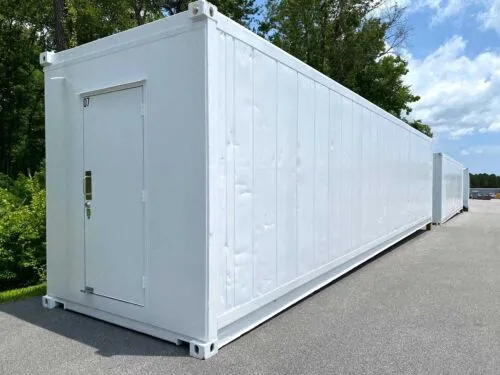
Order your 40ft high cube insulated container with HVAC unit today
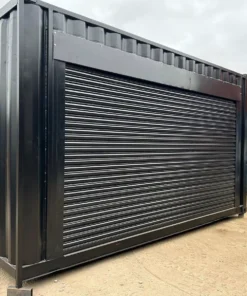
The 40ft high cube insulated container with HVAC unit in our shop is the box European businesses reach for when the weather refuses to cooperate. Each unit starts life as a Corten steel high cube frame, one foot taller than a standard container, then receives a full thermal lining and a wall mounted HVAC unit that heats, cools and manages humidity through a single thermostat.
That combination turns raw steel into a genuine climate controlled space. Cold storage stays cold in a July heatwave. A mobile office stays warm through a Nordic January. Sensitive stock, from electronics to pharmaceutical samples, sits in stable conditions instead of riding the swings of an uninsulated metal box. The insulation does the quiet work of slowing heat transfer, so the HVAC unit runs less, costs less and lasts longer.
We supply this unit as part of our modified shipping containers for sale range, and it pairs naturally with our office shipping containers for sale if your project grows. Delivery reaches sites across Europe, and our team helps you plan the pad, the power hookup and the access route before the lorry arrives.
Send us your project details through our contact page and we will return a tailored quote, usually within one working day.
Why Europe keeps buying the 40ft high cube insulated container with HVAC unit
The 40ft high cube insulated container with HVAC unit has quietly become one of the most requested modified boxes in our shop. It solves a problem every project manager from Manchester to Munich knows well: standard steel containers cook in summer, freeze in winter, and sweat condensation onto whatever you store inside. Add thermal lining and active climate control, and the same shell becomes a stable, movable room, dispatched across Europe as a pharmacy, a server room, a workshop or a site office.
Key takeaways
- An insulated high cube container pairs foam thermal lining with active heating, cooling and humidity control in one movable steel shell.
- The high cube format adds one foot of height over a standard 40ft box, giving about 76.4 cubic metres of volume before lining.
- Foam linings of the PIR and PUR class conduct as little as 0.023 W/(m·K) of heat, according to published material data.
- HVAC units in this class deliver around 17 kW of cooling capacity and need a dedicated power supply, taken from the rating plate.
- Pricing depends on condition, lining thickness and delivery distance, so we quote each project individually.
What is a 40ft high cube insulated container with HVAC unit?
A 40ft high cube insulated container with HVAC unit is a Corten steel box lined with thermal foam and fitted with climate control.
Under the skin, this is an ISO intermodal container of the high cube family, built from corrosion resistant Corten steel with marine plywood flooring, standing 2.896 metres tall externally against 2.591 metres for a standard 40ft box, as set out in this 40ft container dimensions guide from CS Containers. The extra headroom matters once the walls are lined, because you keep usable internal height.
The insulation is where the character changes. Rigid foam boards of the polyisocyanurate (PIR) family offer a typical thermal conductivity of about 0.023 W/(m·K), according to technical data published on Wikipedia. The lining wraps the walls, roof and doors, while a wall mounted HVAC unit, pushes conditioned air through the space under thermostat control.
The purpose is well established. As Wikipedia’s entry on insulated shipping containers puts it:
Insulated shipping containers are a type of packaging used to ship temperature sensitive products such as foods, pharmaceuticals, organs, blood, biologic materials, vaccines and chemicals.
Our version makes that principle permanent, comfortable and relocatable, which is why it sits in our modified shipping containers for sale category.
Why buy an insulated high cube container instead of a standard shipping container?
Insulated high cube containers hold steady temperatures, cut condensation and lower running costs, while dry containers offer no thermal protection.
A bare steel container is honest about its limits. On a sunny August afternoon the air inside can soar far above the outdoor temperature, and when warm humid air meets a cold steel wall at dusk, the moisture drops out as condensation. That is miserable for people and catastrophic for electronics, documents and pharmaceuticals. The insulated box attacks both problems: the foam lining buffers temperature swings and lifts internal surfaces above the dew point, while the HVAC unit only trims the difference rather than fighting the elements, which shows up on your energy bill. If you are weighing options, our guide on how to choose the right shipping container breaks the decision down.
Which projects suit an insulated high cube container best?
Cold storage, server rooms, mobile offices, laboratories, grow rooms and workshops suit it best, as each needs stable conditions year round.
In practice, our customers deploy this box in six recurring roles:
- Temperature controlled storage for food, beverage and retail stock.
- Server and telecom rooms on temporary sites, where humidity control protects hardware.
- Mobile offices and site welfare, a natural fit with our office shipping containers for sale range, and compared in our office container versus modified container piece.
- Laboratories and medical storage, echoing the pharmaceutical and vaccine uses documented by Wikipedia.
- Workshops and light production, where the high cube height allows racking, ducting and suspended services.
- Pop up venues, sitting alongside specialist units like our 10ft custom container coffee shop.
The common thread is simple: whenever the contents or the people inside care about temperature and humidity, this container earns its keep.
How does the HVAC unit keep the container temperature stable?
The wall mounted HVAC unit heats, cools and manages humidity, while the foam lining slows heat transfer, so the interior stays stable all year.
Think of the system as an envelope plus an engine. The envelope is the foam lining, which slows the rate at which heat floods in during summer or leaks out during winter. The engine is the wall mounted HVAC unit, rated in this class at roughly 17 kW of cooling capacity. Because the envelope does most of the work, the unit holds the setpoint with smaller swings and manages humidity as well as temperature.
One practical note on services. A unit of this class needs a dedicated power supply, and the exact rating is taken from the unit’s own plate, which we confirm with you before dispatch. Our guide on preparing your site for a container delivery covers the pad and the services checklist.
What are the dimensions and specifications of a 40ft high cube container?
Here is how the three 40ft formats compare. Exact figures shift slightly between manufacturers, a point Hapag-Lloyd and iContainers both make about their fleet data, so we confirm the drawing of your unit before dispatch.
| Specification | 40ft standard | 40ft high cube | Our insulated high cube unit with HVAC |
|---|---|---|---|
| External length | 12.192 m | 12.192 m | 12.192 m |
| External width | 2.438 m | 2.438 m | 2.438 m |
| External height | 2.591 m | 2.896 m | 2.896 m |
| Internal height (before lining) | 2.393 m | 2.698 m | 2.698 m, reduced by the lining thickness |
| Internal volume (before lining) | 67.7 m³ | 76.4 m³ | approximately 67 to 76 m³ depending on lining |
| Thermal protection | none | none | PIR or PUR class foam lining, about 0.023 W/(m·K) conductivity |
| Climate control | none | none | wall mounted HVAC unit, around 17 kW |
| Power requirement | none | none | dedicated supply at 230 V, taken from the rating plate |
| Typical uses | dry storage | bulk storage, conversions | climate controlled storage, offices, labs, server rooms |
You trade a few centimetres of internal girth for a completely different class of interior environment. For smaller sites, our 20ft open side high cube container offers full side access instead.
Where can you order an insulated container with HVAC unit in Europe?
You can order directly from us, and we deliver to sites across Europe. Start on the contact page, tell us the destination postcode and the intended use, and we price the unit plus delivery as one figure, with the electrical hookup confirmed before dispatch. If you are new to buying steel, our article on 10 mistakes to avoid when buying a shipping container is worth reading before you commit.
How much does a 40ft high insulated cube container with HVAC unit cost?
Prices depend on condition, insulation thickness, HVAC capacity and delivery distance, so we quote each project individually once we know your needs.
A unit bound for a Berlin building site does not cost the same as one crossing into Scandinavia, and the specification of the lining and the HVAC unit moves the price too. An insulated high cube with a fitted HVAC unit sits well above a plain high cube, and the lining thickness and the unit capacity move the figure further. European delivered pricing depends on your site.
FAQ: your questions about the 40ft insulated container answered
How much does a 40ft insulated container with HVAC cost in Europe?
Costs vary with condition, lining thickness, HVAC capacity and delivery distance, which is why we quote individually. An insulated high cube unit with a fitted HVAC system sits well above a plain high cube, and European delivered pricing depends on your site. Request a quote and we price the unit and delivery together.
What power supply does the HVAC unit need?
Units of this class typically need a dedicated supply at 230 V, taken from the rating plate. Confirm your site supply before delivery, since upgrading a hookup after the container lands costs more than planning it first.
Can people work inside an insulated container all year?
Yes. The lining buffers outdoor extremes while the HVAC unit heats, cools and manages humidity, so the interior stays comfortable through a Nordic winter and a Mediterranean summer. Many customers use the box as a mobile office or workshop year round.
Does the insulation stop condensation?
It reduces it sharply. The foam lining keeps internal surfaces warmer than the dew point, so moisture stops forming on walls and ceilings. The HVAC unit supports this by managing humidity directly, protecting electronics, documents and sensitive stock.
Is the 40ft insulated container wind and watertight?
Yes, the underlying container is a wind and watertight steel unit, and the lining adds thermal protection on top. We check seals, door gaskets and the roof before dispatch, and we encourage inspection at delivery.
Reviews
There are no reviews yet.