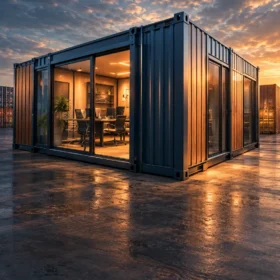
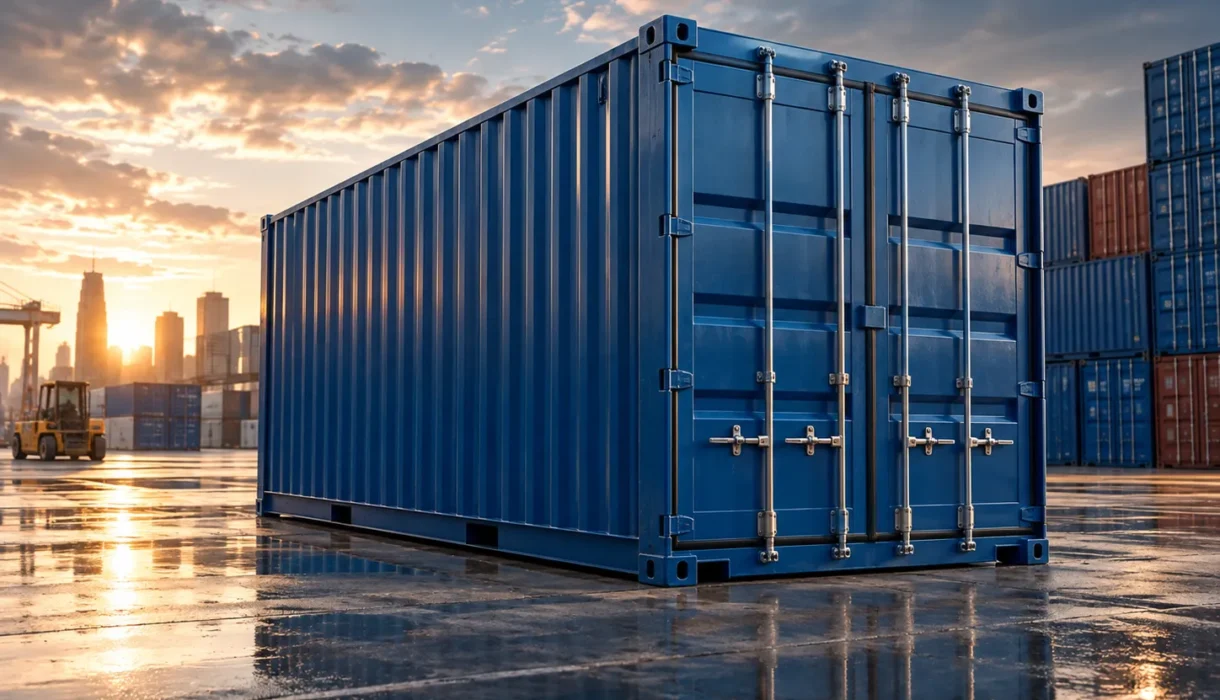

The 20ft vs 40ft shipping container decision is settled by site access and by what you are storing, not by floor area alone.
Most people pick a container size by looking at two numbers: 14 square metres or 28 square metres. It is a reasonable place to start and a poor place to finish. The size that fits your stock is often not the size that fits your site.
A 40ft container is better value per square metre than a 20ft. That is arithmetic and it does not change. What changes is whether a lorry can get a 12 metre box onto your yard, whether you want all your stock in one place, and how far you are willing to walk to reach something stored at the back.
This guide works through the floor area, the money, and the access reality that overrides both.
The numbers, stated plainly
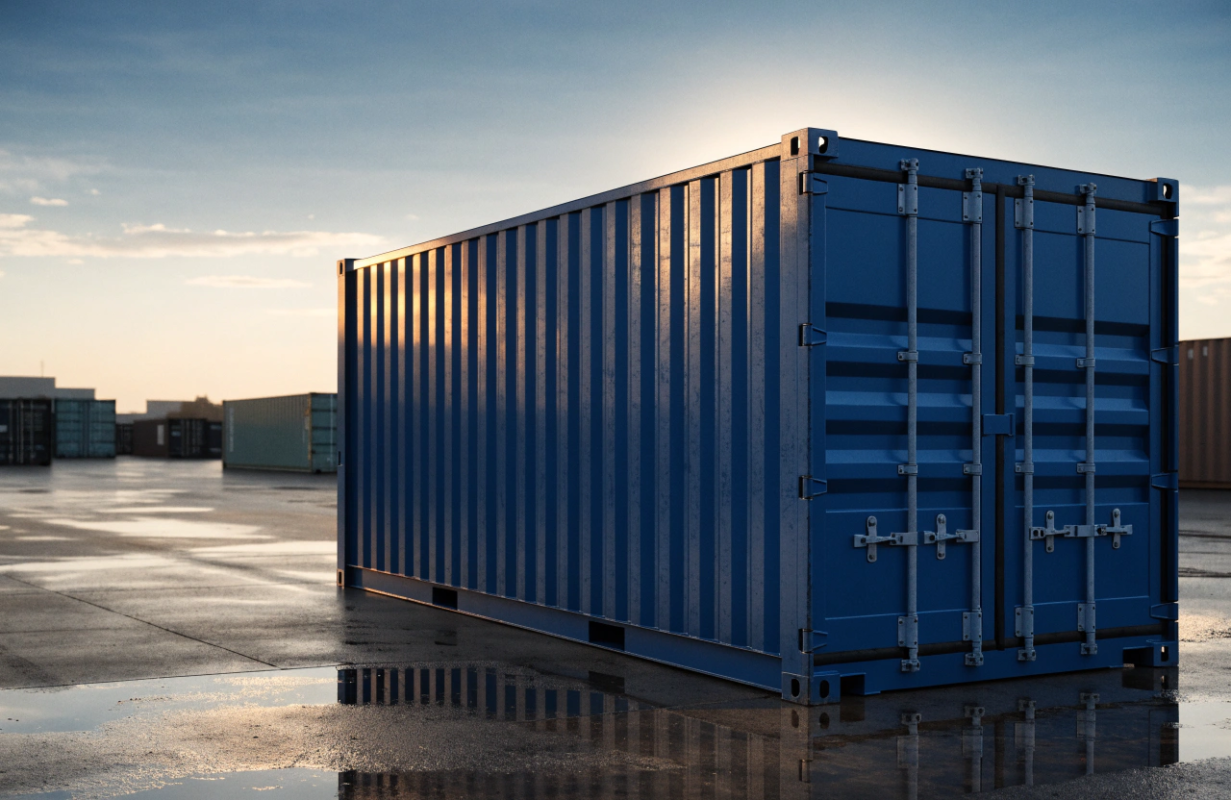
Both sizes are built to the same ISO standard, so the figures are consistent across the market.
20ft standard:
- External: 6.096 x 2.438 x 2.591 m
- Internal: 5.944 x 2.330 x 2.350 m
- Door opening: 2.280 x 2.260 m
- Internal volume: 32.85 m³
- Tare weight: 2,230 kg
40ft standard:
- External: 12.192 x 2.438 x 2.591 m
- Internal: 12.014 x 2.330 x 2.350 m
- Door opening: 2.280 x 2.260 m
- Internal volume: 66.83 m³
- Tare weight: 3,950 kg
Round the floor area to 14 m² for a 20ft and 28 m² for a 40ft and you will not be far out. Note that the width and the height are identical. A 40ft is a 20ft made longer, nothing else. If your problem is that a machine is too tall or too wide, a 40ft solves nothing and you should be looking at a high cube or an open top instead.
What actually fits
Floor area on its own is misleading, because you rarely fill a container to the roof and you almost never fill it wall to wall.
A 20ft takes around ten to eleven standard Euro pallets on the floor, or about twenty if you double stack and your goods allow it. A 40ft takes roughly twenty one to twenty four on the floor. Those numbers assume you load through the doors and stack tight, with no aisle.
The moment you want to walk in and pick items, the useful capacity drops hard. Leave a 900mm aisle down the middle of a 20ft and you are down to two runs of shelving roughly 700mm deep. That is still a lot of storage, but it is not ten pallets any more.
Be honest with yourself about which container you are buying. A sealed box you load once and open in eighteen months is a different calculation from a working store you go into every morning.
Price per square metre, and where it stops helping
Published European starting prices in 2026 run from around €1,125 for a used 20ft and around €2,025 for a used 40ft. New, one trip units start near €1,725 and €3,125 respectively. Treat those as market floors rather than typical delivered prices.
Run the maths on the used figures. The 40ft gives you double the floor for roughly 80 percent more money, so you are paying about €80 per square metre against about €72. The 40ft wins on paper by a reasonable margin.
Then add delivery. A single 40ft delivery usually costs less than two separate 20ft deliveries, which widens the gap further. On pure cost per square metre delivered, the 40ft is the better buy nearly every time.
So the interesting question is not which is cheaper per square metre. It is what would stop you taking the 40ft.
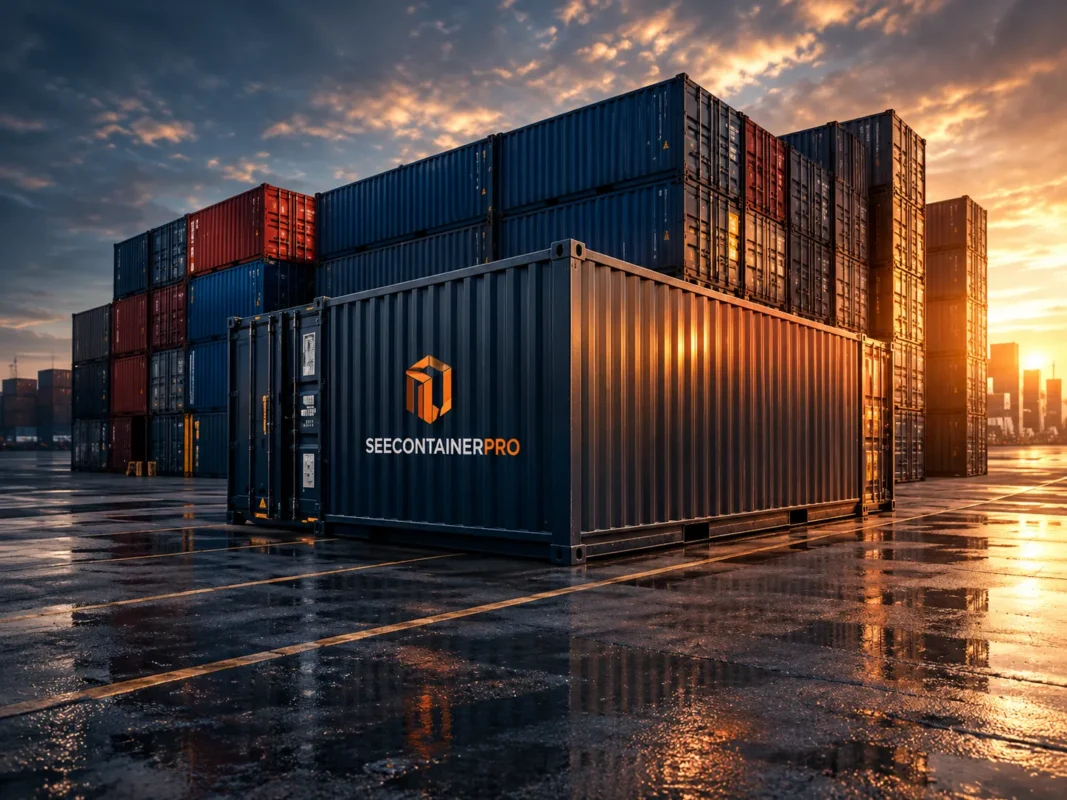
Access decides more purchases than budget does
Containers arrive on a tilt bed or roll-off truck. The bed tilts, the container slides off the back, and the truck pulls forward as it comes down. That means the vehicle needs a clear straight run.
Plan for roughly 18 metres of clear straight approach for a 20ft and roughly 30 metres for a 40ft, plus around 3.6 metres of width and 4.2 metres of overhead clearance. The ground has to be firm and level: concrete, compacted hardcore or well-drained gravel. A slope beyond a few degrees is a problem.
The part people underestimate is this: the driver cannot reposition the container once it is off the truck. Where it lands is where it stays until you hire a crane or a forklift rated for the weight. Mark the exact footprint before delivery day and check that the doors will have room to swing fully open.
Plenty of sites have 18 metres and nowhere near 30. Farm entrances, tight industrial estates, walled yards and anywhere with a gate post or a low branch all rule out the 40ft on approach alone. If that describes your site, the decision has already been made for you.
Two 20fts instead of one 40ft
This is the option most buyers skip, and it is often the right one.
Two 20ft containers give you the same 28 square metres. They cost more in total and more in delivery. In exchange you get things a single 40ft cannot give you:
- Doors at both ends of your storage. Two 20fts give you two sets of doors serving 14 m² each, rather than one set serving 28 m².
- Separation. Tools in one, materials in the other. Different teams, different keys, different access rules.
- Placement flexibility. You can put them in an L, in separate corners of a yard, or on two different sites.
- Easier resale. Two 20fts sell faster and to more buyers than one 40ft.
The case against is simple. You pay more, you get two lots of delivery, and you lose the ability to store anything longer than about six metres. If you handle long timber, steel sections or pipe, that last point ends the discussion.
The walk to the back
A 40ft container is twelve metres deep with doors at one end. Whatever went in first is twelve metres away, behind everything else.
For palletised stock handled by forklift, that is fine. For hand-picked items, it is a daily cost. You will end up storing the things you use most near the doors and the rest becomes, in practice, long-term storage you avoid touching.
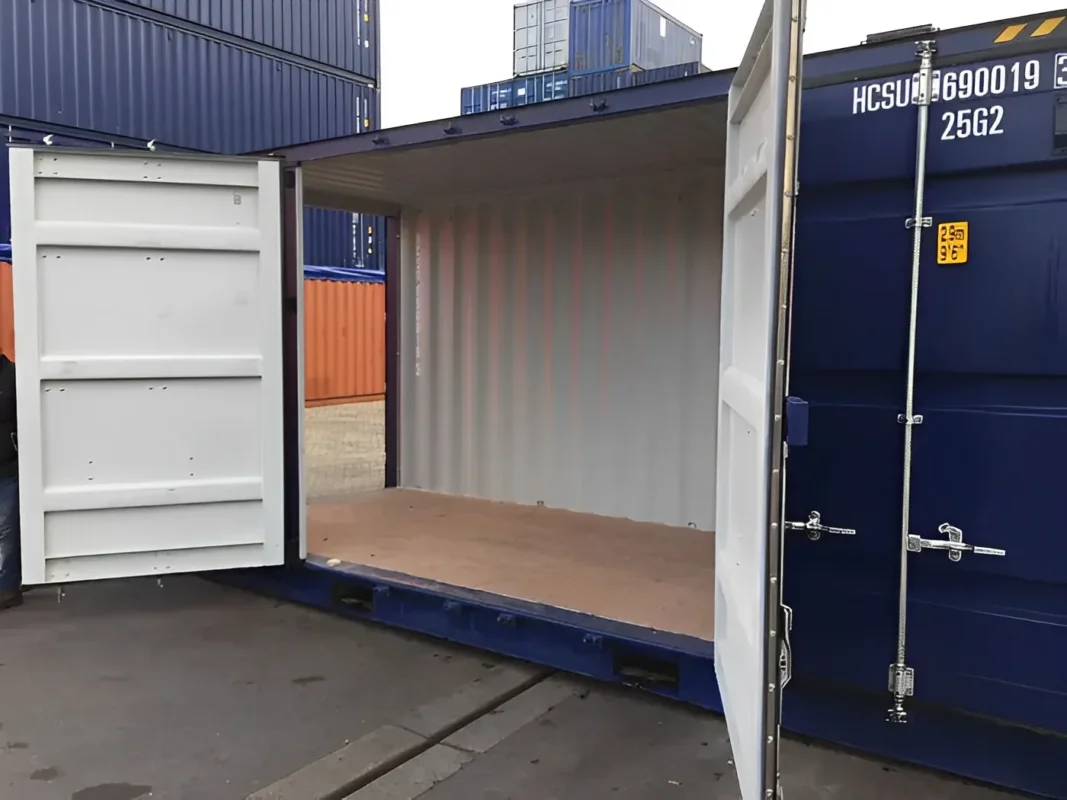
There are ways around it. Side opening containers give you access along the full length, at a higher price. Two sets of doors, one at each end, is a common modification. Or you buy two 20fts and accept the extra cost as the price of reaching your stock.
If you are honest that you will be walking in and out several times a day, factor that in before you take the cheaper square metres.
Splitting stock across sites
Construction buyers and multi-site operators should think about this early. One 40ft at the depot means every site collects from the depot. Two 20fts, one on each of two active sites, cuts a lot of van movements.
The same applies to seasonal work. A 20ft can be repositioned onto a site for a six month job and moved again afterwards. A 40ft is a much bigger commitment to one location, because moving it needs the same 30 metre approach at the new address.
Resale and repositioning
Containers hold value reasonably well, so think about the exit before you buy.
20ft units have the broader second hand market. More buyers can accept one on their site, more transport options exist, and the lower ticket price means more people can justify it. A 40ft sells to a smaller pool and usually takes longer.
Repositioning follows the same logic. Moving a 20ft is a routine job. Moving a 40ft means confirming approach, width and overhead clearance at the destination before anyone quotes.
Further reading
- ISO 668:2020, the standard that fixes container classification, dimensions and ratings (ISO)
- The key ISO container standards, summarised (Bureau International des Containers)
How to choose
Work through it in this order:
- Measure the approach. If you cannot offer 30 metres of straight clear run, the 40ft is out. Stop here.
- Check the ground. Firm, level, drained, across the full footprint including the door swing.
- Decide how you will use it. Sealed store, or something you open daily.
- Count your longest item. Anything over six metres needs the 40ft.
- Then compare price per square metre, including delivery for both options.
If the site takes a 40ft, you handle long goods and you load by forklift, take the 40ft. If access is tight, you pick by hand, or you want stock in more than one place, two 20fts will serve you better despite costing more.
You can compare sizes and current pricing on our standard container range, or look at modified units if side access or a second set of doors would solve the problem. Tell us about the site and we will come back with a written quotation.
20ft vs 40ft shipping container: how to decide
Measure the approach before you measure the load. A 20ft unit needs roughly 20 m of straight, clear run; a 40ft needs considerably more and a wider turn. If the site takes both, choose on cargo shape and door access. Send us the site address and what goes inside, and we will tell you which size lands cleanly.