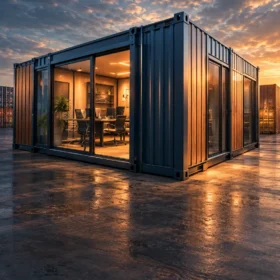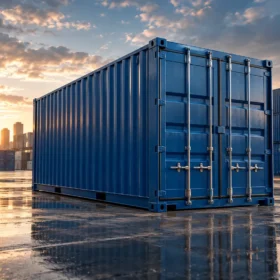


Shipping container cost depends on three things: condition, size and how far the unit has to travel to reach you.
Container pricing confuses people because one phrase covers very different things. A 20ft container can mean a unit that has crossed the Pacific twenty times, or one that left the factory eight months ago and has made a single loaded voyage. Those two sit thousands of euros apart, and both get advertised as a 20ft container.
This guide sets out what the European market looks like in 2026, what sits behind the number, and which costs land after the container price.
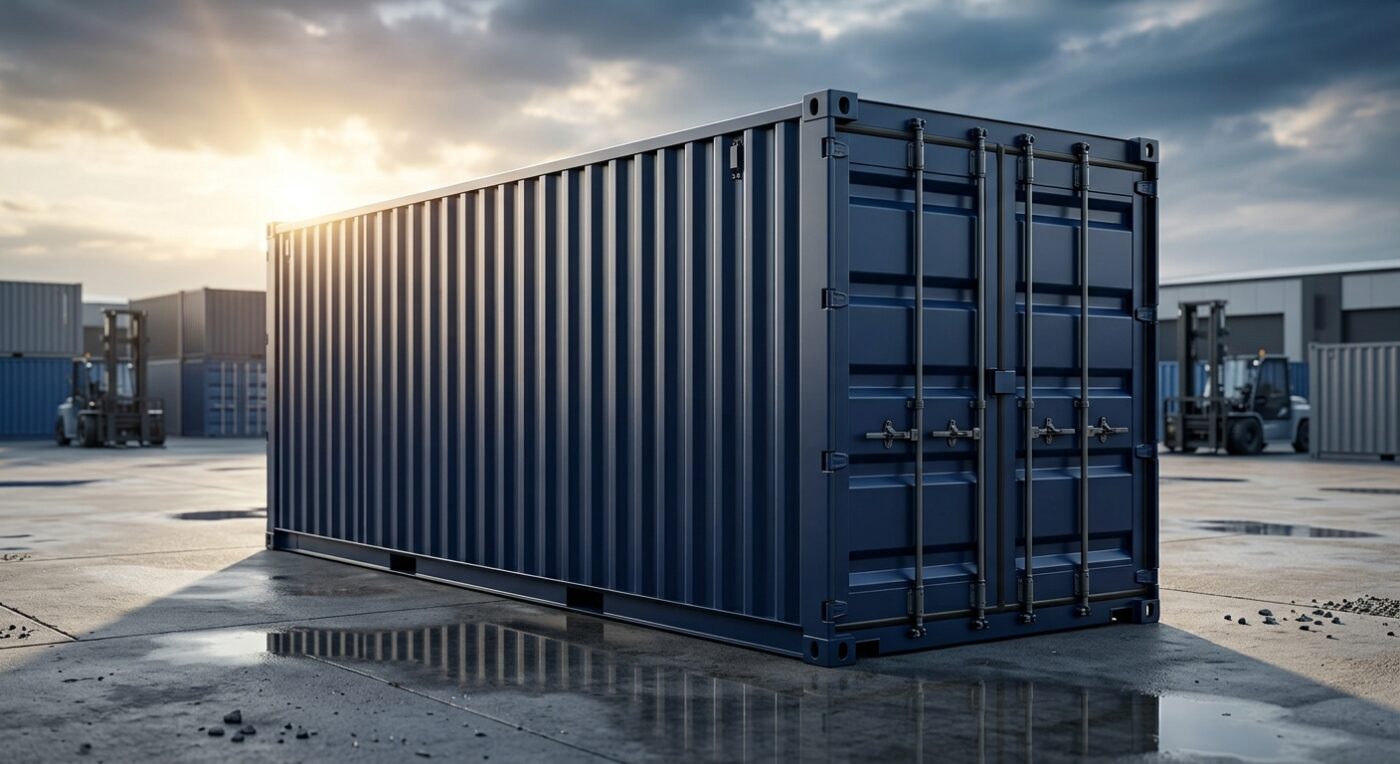
European container prices in 2026
Published European starting prices in 2026 look broadly like this:
- 20ft used: from around €1,125
- 20ft new, one trip: from around €1,725
- 40ft used: from around €2,025
- 40ft new, one trip: from around €3,125
- 40ft high cube used: from around €2,325
- 40ft high cube new: from around €3,425
Read those as floors rather than averages. They are the numbers suppliers advertise to get you to enquire, and they usually describe a unit sitting at a large depot, collected rather than delivered, in whatever colour happened to arrive.
The gap between new and used runs at roughly 30 to 50 percent across the market. That spread is the biggest single decision in the purchase, which is why it deserves more than a glance at two numbers.
Why condition moves the price so much
A shipping container is built for twenty five to thirty years of sea service. What you buy second hand is the remaining part of that life.
A used container with valid CSC plating typically has fifteen to twenty years left in it. A new one starts the clock at twenty five to thirty. You pay the difference for time, and for the absence of the small problems that come with age: surface rust at the seams, a floor that has taken a forklift tyne, door gaskets that have gone hard, a roof with a shallow dent that holds water.
None of that stops a container being useful. A fifteen year old box storing landscaping tools on a yard does the job perfectly. The same box as a customer-facing coffee kiosk on a high street is a different conversation.
What one trip actually means
New containers are sold as one trip units. They are built in Asia, loaded with cargo for a single voyage to Europe, then sold. That is cheaper for everyone than shipping an empty box across the world, and it is why a new container arrives with a small amount of wear rather than none at all. Expect a scuff or two. Expect the interior and the seals to be intact.
If a supplier quotes new at close to used money, ask what the unit actually is. Refurbished, repainted and resealed containers are legitimate and often good value, but they are not one trip units and should not be priced as if they are.
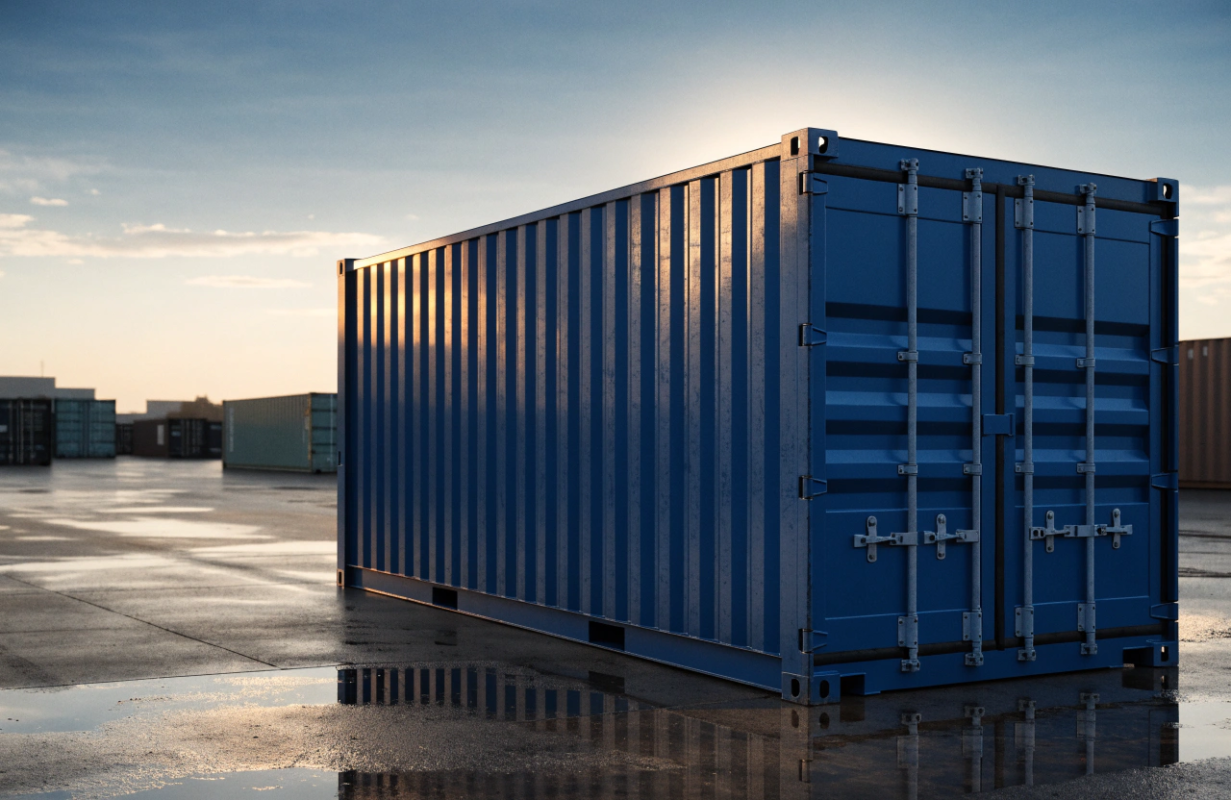
Size and the price per square metre
A 40ft container gives you 28 square metres of floor. A 20ft gives you 14. The 40ft costs roughly 80 percent more than the 20ft, not 100 percent, so on paper the bigger box is better value per square metre.
That calculation only holds if you can get it on site. A 40ft container needs around 30 metres of straight clear approach for the delivery vehicle to tilt and slide it off. Many yards, farms and commercial units cannot offer that. Two 20ft containers can be placed where one 40ft cannot, and they can go in different places, which sometimes matters more than the floor area.
Work out the access first and the price per square metre second.
The costs that sit outside the container price
The advertised figure is rarely the figure you pay. Four things routinely sit on top of it.
Delivery
Transport is priced by distance from the nearest depot holding the unit you want, and by how hard your site is to reach. A straightforward drop within an hour of a depot is modest. A long haul, a crane lift instead of a tilt bed, or a restricted-access site with a traffic management plan all change the number substantially. Ask for delivery as a separate line rather than accepting a bundled total, so you can see what you are paying for.
Groundwork
Containers need firm, level ground. Concrete, compacted hardcore or well-drained gravel all work. Soft or waterlogged ground does not, and neither does a slope of more than a few degrees.
If the ground is not ready, budget for it. Four concrete pads or a run of railway sleepers under the corner castings is inexpensive compared with a twisted container frame and doors that no longer close.
Modifications
A personnel door, a window, insulation, power, shelving, a partition. Each has a cost, and the total climbs quickly once you are past the basics. A finished container office in Europe generally starts several thousand euros above the bare container.
VAT
Advertised prices are frequently quoted without VAT. Check before comparing anything. A price that looks 20 percent better may simply be the same price with the tax left out.
What moves the market
Container prices follow global trade rather than local demand. When freight volumes are high, boxes stay in circulation and fewer reach the resale market, so prices firm up. When trade slows, depots fill and prices soften.
Where you are buying matters too. Europe is a net importer of containerised goods, which means more boxes arrive than leave and there is a steady supply of used units at inland depots. Coastal and major port regions usually price lower than inland ones for the simple reason that the container is already there.
None of this is predictable enough to time. If you need a container this quarter, buy it this quarter. Waiting for the market rarely pays for itself.

Comparing two quotes properly
Quotes for the same nominal container often differ by a four figure sum. Before assuming one supplier is expensive, check these six points against both:
- Condition, stated plainly. One trip, cargo worthy, wind and watertight, or as is. These are not interchangeable.
- Height. Standard at 2.59m or high cube at 2.89m. The extra foot is worth real money and is easy to miss in a listing.
- Delivery included or not, and to what kind of access.
- VAT included or not.
- Doors. Standard cargo doors at one end, or side opening, which costs more.
- What happens if it arrives wrong. A supplier who will not answer that question in writing is telling you something.
Once those six line up, the comparison is real. Until then you are comparing two different products.
Further reading
- ISO 668:2020, the standard that fixes container classification, dimensions and ratings (ISO)
- International Convention for Safe Containers, the treaty behind the CSC plate (IMO)
Getting a figure for your job
Published ranges give you a sense of scale. They cannot price your purchase, because your purchase includes your ground, your access and your intended use.
The fastest route to a real number is to describe three things: what goes in the container, where it will stand, and what a lorry has to get past to reach it. That is enough for anyone competent to quote accurately.
You can see current pricing for each range on our container pages, or send us the details and we will come back with a written quotation.
What drives shipping container cost in 2026
Condition sets the base price, size scales it, and delivery distance adds the rest. Treat every published figure as a starting range, because shipping container cost moves with the depot, the grade and the week you buy. Send us the size, the condition you want and the delivery address, and we will quote the real number.