
Buying a shipping container is not complicated, but it is unfamiliar to most people doing it for the first time. That combination produces a predictable set of mistakes. Here are the ones we see most often, and what to do instead.
1. Leading with size instead of use
The classic opener is “I need a 20ft.” Sometimes that is right. Often it is a number someone half-remembers, and the requirement underneath it points somewhere else entirely.
Instead: describe what goes in and what happens in there. The specification falls out of that. If you genuinely know the size you need because you have bought before, say so — but say why as well.
2. Ignoring the ground until delivery day
The container is the easy part. The surface it lands on decides whether the doors work in six months.
Instead: sort out level, firm ground and drainage before you book anything. See our site preparation guide for the detail.
3. Forgetting that a vehicle has to get there
A surprising number of container problems are actually access problems — a gate that is narrower than assumed, a branch nobody looked up at, nowhere to turn.
Instead: walk the route before you enquire and mention anything awkward up front. Suppliers plan around known constraints happily. Discovering them on the day is what causes trouble.
4. Over-specifying because it feels safer
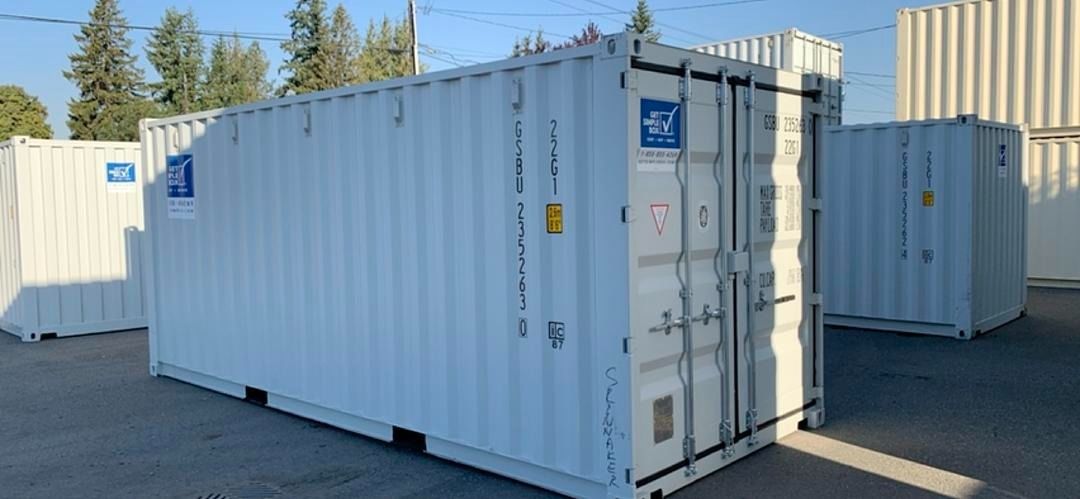
It is easy to add modifications on the basis that you might want them one day. Extra doors, extra windows, an internal wall you are not sure about.
Instead: pay for what the job needs now, plus the things that are genuinely painful to change later — openings, layout, where services enter. Everything else can wait until you know you need it.
5. Under-specifying to save money, then paying twice
The mirror image. Buying a plain unit for a job that clearly needed adapting, then paying someone to cut into it afterwards.
Instead: be honest about the job at quotation stage. If the answer is a modified container, finding that out now is cheaper than finding out later.
6. Not thinking about condensation
A sealed steel box with a temperature difference across its skin will produce moisture. Whether that matters depends entirely on what is inside — scaffold fittings do not care, paperwork and electronics very much do.
Instead: tell your supplier what is going in. If it is moisture-sensitive, say so, and let it shape the specification rather than discovering the issue in winter.
7. Treating security as an afterthought
Containers are inherently secure compared with most alternatives, which sometimes leads people to stop thinking about it. Position, visibility, lighting and how the doors face all affect how attractive a target the unit is.
Instead: decide where it sits and which way the doors face with security in mind, not just convenience. Doors facing a wall or another container are harder to work on unobserved.
8. Buying on price alone from a supplier who will not ask questions
The cheapest quotation is often the one from whoever asked you the fewest questions — because they have not understood the job and have quoted the simplest thing.
Instead: notice who asks about access, ground, use and duration. Those questions are not a sales technique. They are the difference between a quotation that holds and one that changes after the site visit.
9. Not planning for what happens afterwards
Projects end. If the unit needs to move to the next site, or be sold on, or repurposed, that is worth knowing at the point of purchase because it affects how it should be specified.
Instead: say what the second life looks like, even if you are not certain. “Probably moving to another site in about a year” is useful information.
Further reading
- International Convention for Safe Containers, the treaty behind the CSC plate (IMO)
- The key ISO container standards, summarised (Bureau International des Containers)
10. Rushing the enquiry and then waiting
A one-line enquiry feels quick, but it starts a slow back-and-forth while the supplier extracts the detail they needed in the first place.
Instead: spend five minutes writing a proper enquiry — use, quantity, location, access, timescale. You will get a real quotation in one round instead of three.
Ready to write that enquiry? Send it through here and we will come back with a quotation and the options worth considering.
A short checklist before buying a shipping container
Confirm the grade in writing, ask for photographs of the actual unit, check the floor and the door seals, agree the delivery vehicle, and prepare the ground. Those five steps remove most of the risk from buying a shipping container.