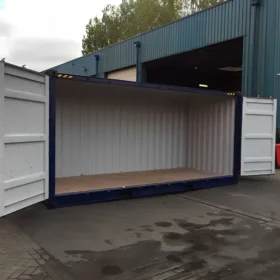


New vs used shipping containers is a question of condition rather than age, and condition decides both what you pay and how long the unit lasts.
Two containers sit on the same depot, both 20 ft, both blue, and both watertight. One is listed at €1,125 and the other at €1,725. The difference is condition, and condition is described by a set of trade terms that sound precise and are not.
Buyers lose money in both directions here. Some pay new prices for a box that will spend its life holding fertiliser bags behind a barn. Others buy the cheapest used unit on the market and then spend more than the saving on welding, paint and a new floor.
This guide explains what you are buying in each case, what the grading words mean, and how to tell which way to go.
What “new” means in the container trade
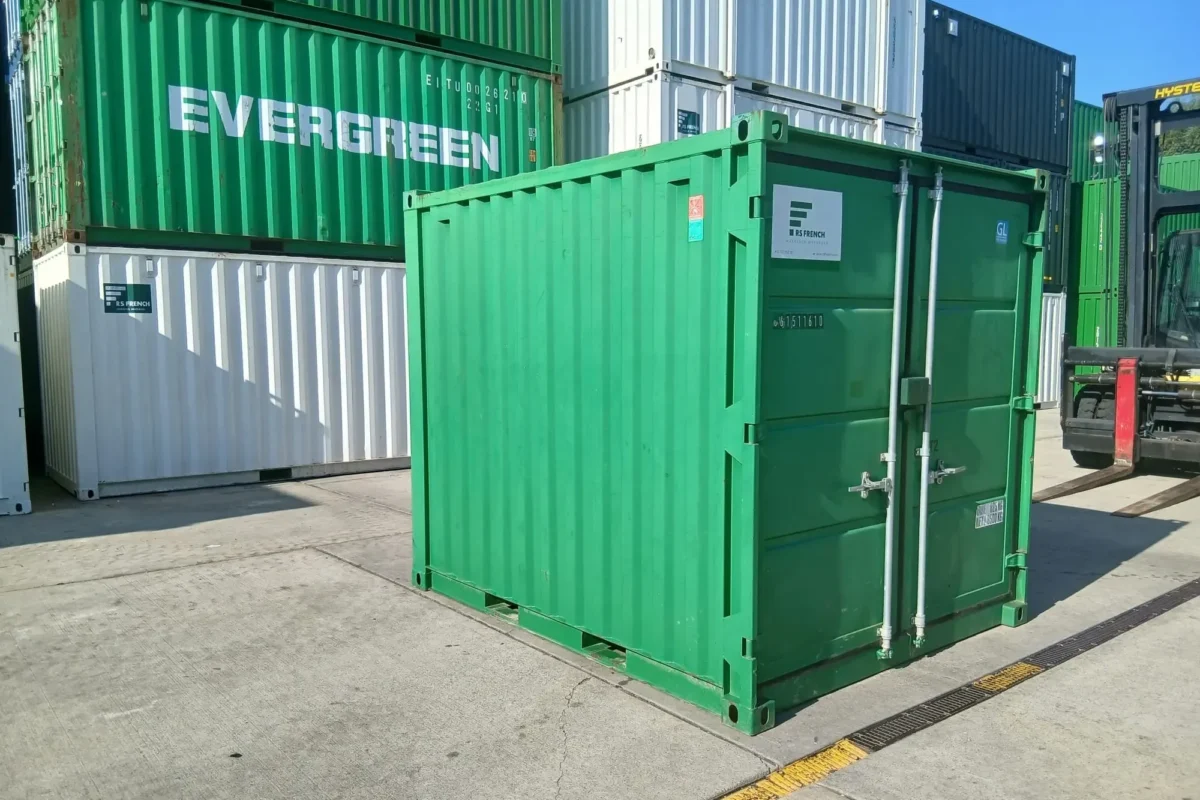
There is almost no such thing as an unused shipping container on the European market.
New containers are built in Asia, mostly in China. Shipping an empty box to Europe costs money and earns nothing, so manufacturers and leasing companies load them with cargo for one voyage and sell them at the destination. That is where the phrase ‘one trip’ comes from, and it is the honest description of what a new container is.
So a new container has made a single loaded sea journey. Expect a scuff on the paint, a mark or two on the floor from whatever was strapped to it, maybe a small dent from a lashing bar. Expect the seals, the floor, the frame and the paint system to be intact and the CSC plate to be current.
If a supplier offers “new” at a price close to used, ask what the unit actually is. Repainted and refurbished containers are a legitimate product and often good value, but a resprayed fifteen-year-old box is not a one-trip unit and should not be priced as one. Ask for the manufacture year off the CSC plate. That settles it.
The grading vocabulary and why it is not reliable
Four terms do most of the work in container listings. Learn them, then treat every one of them with suspicion, because none of them is standardised between suppliers. There is no European body that certifies what “cargo worthy” means in a sales listing. Two depots can apply the same word to units in visibly different conditions.
One trip
Sold as new. One loaded voyage. Factory paint, clean floor, current CSC plate. The most expensive grade and the only one where you can reasonably expect the container to look the way it does in the photograph.
Cargo worthy
Certified fit to carry goods by sea. It has a valid CSC plate, the structure is sound, the doors seal and the floor is serviceable. It has visible age: surface rust at the seams, patch repairs, dents, and faded or mismatched paint. This is the workhorse grade and the sensible default for most storage buyers.
Wind and watertight
Keeps the weather out. That is the whole promise. It may not have a current CSC plate, which means it may not be shippable by sea. For a static store on your own ground that does not matter. If you intend to move goods internationally inside it, it matters a great deal. Ask directly whether the CSC plate is valid and in date.
As is
No promise at all beyond what you can see. Sometimes these are fine units with cosmetic damage. Sometimes they have a rotten floor section, a holed roof or doors that no longer close. Never buy “as is” without inspecting it yourself or getting dated photographs of the roof, the floor, all four walls and both door seals.
Because the terms drift, ask for conditions in specifics rather than labels. Is the CSC plate valid, and what is the date? Is there any rust that has gone through? What is the floor like? Do both doors close and seal without force. Those four answers tell you more than any grade name.
Remaining service life
This is the cleanest way to think about the price gap.
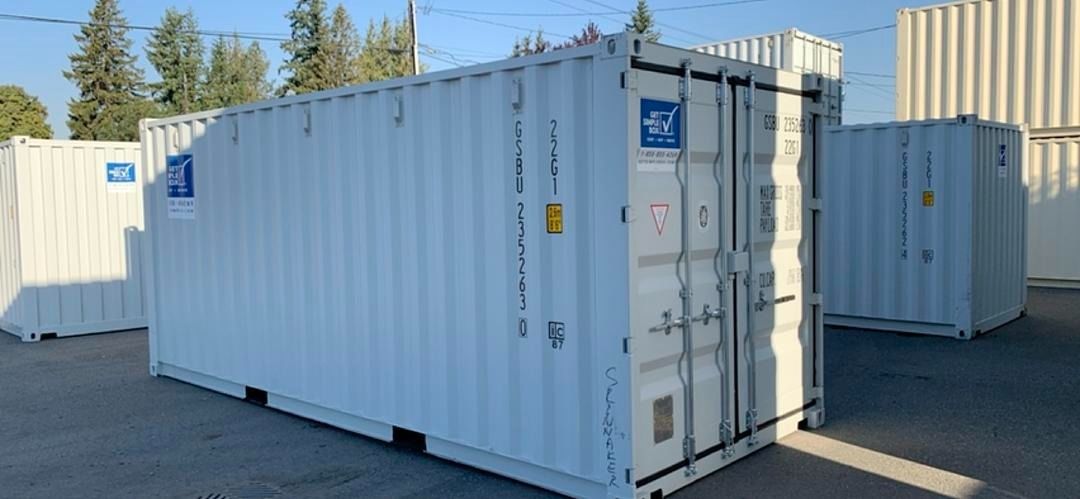
A shipping container is engineered for roughly twenty-five to thirty years of sea service. When you buy used, you are buying whatever is left of that. A used container with a valid CSC plate typically has fifteen to twenty years of service life remaining. A one-trip container starts at the full twenty-five to thirty.
New runs are roughly 30 to 50 per cent above comparable used across the European market. For that premium you get around ten extra years, plus the absence of the small defects that come with age.
Static storage on land is far gentler than sea service, so a used container used as a store will usually outlast those figures comfortably, provided it sits on firm level ground and gets painted when it needs it. Corner castings on solid pads and water draining away from the unit matter more to its lifespan than the grade you bought.
What used wear actually looks like
Knowing what to expect stops you rejecting a good container or accepting a bad one.
- Surface rust. Orange staining at the seams, around welds and along the roof edges. Normal on any used unit. Wire brush and paint. Not a fault.
- Dents: Corrugated walls dent easily, and it rarely means anything structurally. A dent in the roof that holds a puddle is worth attention, because standing water is how surface rust becomes a hole.
- Floor wear. Marine plywood floors take forklift damage, gouges, and oil staining. Check for soft spots and delamination. A patch repair is routine. A floor that flexes underfoot is a real cost.
- Door gaskets. Rubber hardens and cracks with age. Cheap to replace, but it is the single most common reason a used container lets water in.
- Paint: Faded, mismatched, or carrying a shipping line logo and old markings. Cosmetic only; unless the unit is going somewhere, customers will see it.
- Previous repairs. Welded plates on walls or floors. Common and acceptable when done properly. Look at whether the repair has been painted and sealed or just tacked on.
Two things should stop a sale: rust that has penetrated through the steel and a twisted frame. Test the second by opening and closing both doors. If they bind or need lifting to latch, the frame has been racked, usually by sitting on uneven ground. That does not get better.
When used, it is clearly the right call.
Buy used without hesitation when:
- The container is a static store on your own site, and nobody outside your business will look at it.
- You are storing tools, materials, plants, archive stock, or anything that does not care about appearance.
- The unit is going somewhere exposed or rough, where it will collect dents anyway.
- You need it for a defined period, a two-year project, for example, and will sell it afterwards.
- Budget is the binding constraint, and you would otherwise buy nothing.
For most construction, agricultural, industrial, and general storage buyers, a cargo-worthy used container is the correct purchase. The extra €600 on a 20 ft boat buys you appearance and years you will not use.
When used, it is a false economy.
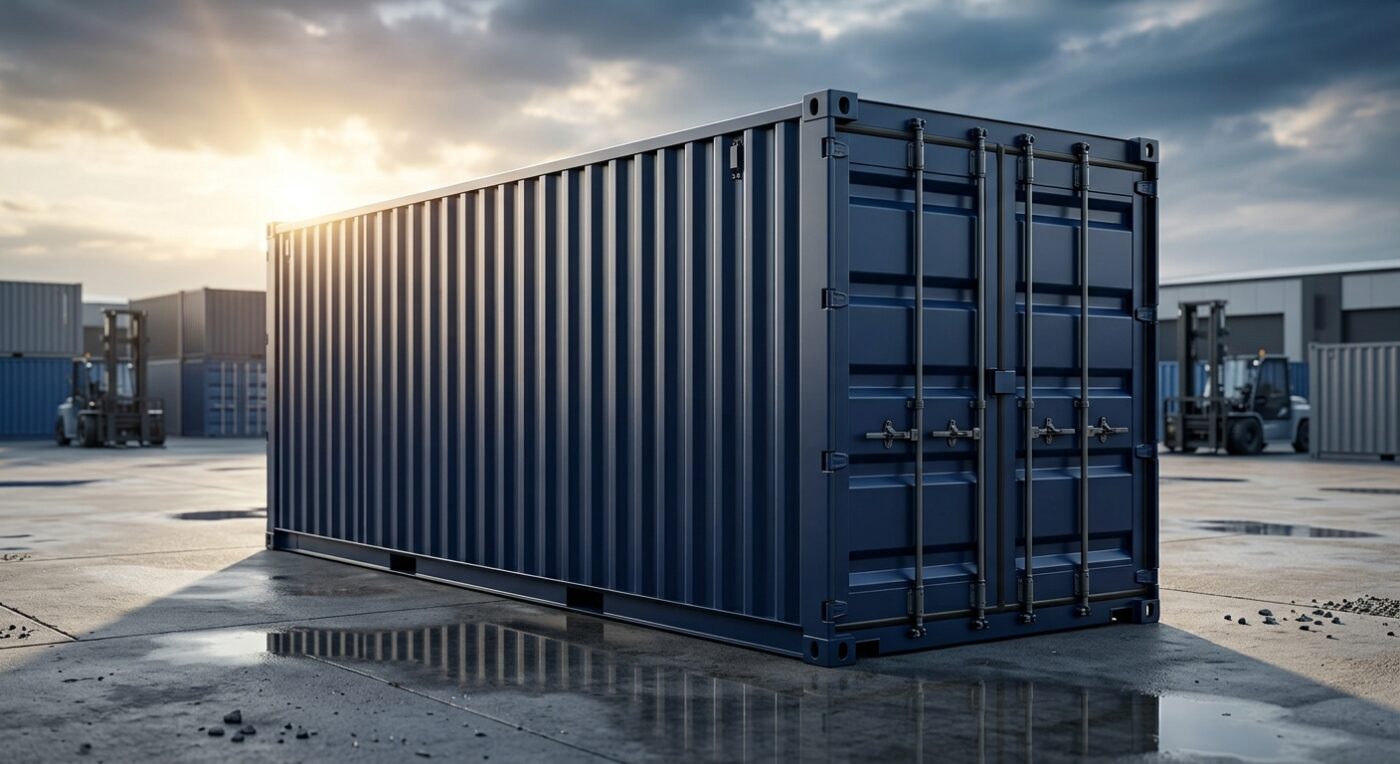
There are cases where the saving evaporates.
Anything customer-facing. A kiosk, a shop, a site office visitor enters, a branded unit. You will repaint and repair a used box to get it presentable, and the labour will cost more than the price gap. Start with clean steel.
Heavy modification. If you are cutting in windows, doors, insulation, and a fit-out, the container is a small part of the total spend. Building an expensive interior inside a corroded shell is poor sequencing. Any structural repair also has to happen before the fit-out, which means paying twice for access.
Insulated or climate-controlled use. Once insulation and lining go in, you cannot inspect or treat the steel behind them. Hidden rust progresses out of sight.
Sea freight. If the container will be shipped, you need a valid CSC plate and a unit that will pass the survey. Cheap used units frequently fail on both.
Long holds. If this container is staying twenty years, the ten extra years of service life are worth the premium.
Further reading
- International Convention for Safe Containers, the treaty behind the CSC plate (IMO)
- The key ISO container standards, summarised (Bureau International des Containers)
Making the decision
Ask what the container has to do, for how long, and who will see it. Static, private, under ten years, and unmodified points to used. Visible, modified, insulated, or permanent points to new.
Whichever way you go, get the condition described in writing, with dated photographs of that specific unit rather than a stock image, and the CSC plate date. A supplier who will not provide those is the risk, not the container.
You can compare grades and current pricing across our standard container range or see what a finished fit-out involves on our container office pages. Tell us what the container is for, and we will come back with a written quotation.
New vs used shipping containers: what you are paying for
A one trip unit gives you straight steel, sound paint and a dry interior. A used cargo worthy unit costs less and carries dents, patches and surface rust that you should inspect before buying. Tell us the use and the budget, and we will say which grade earns its price.