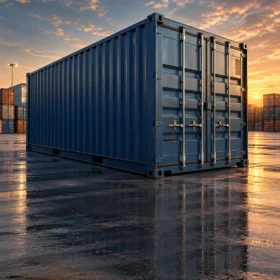
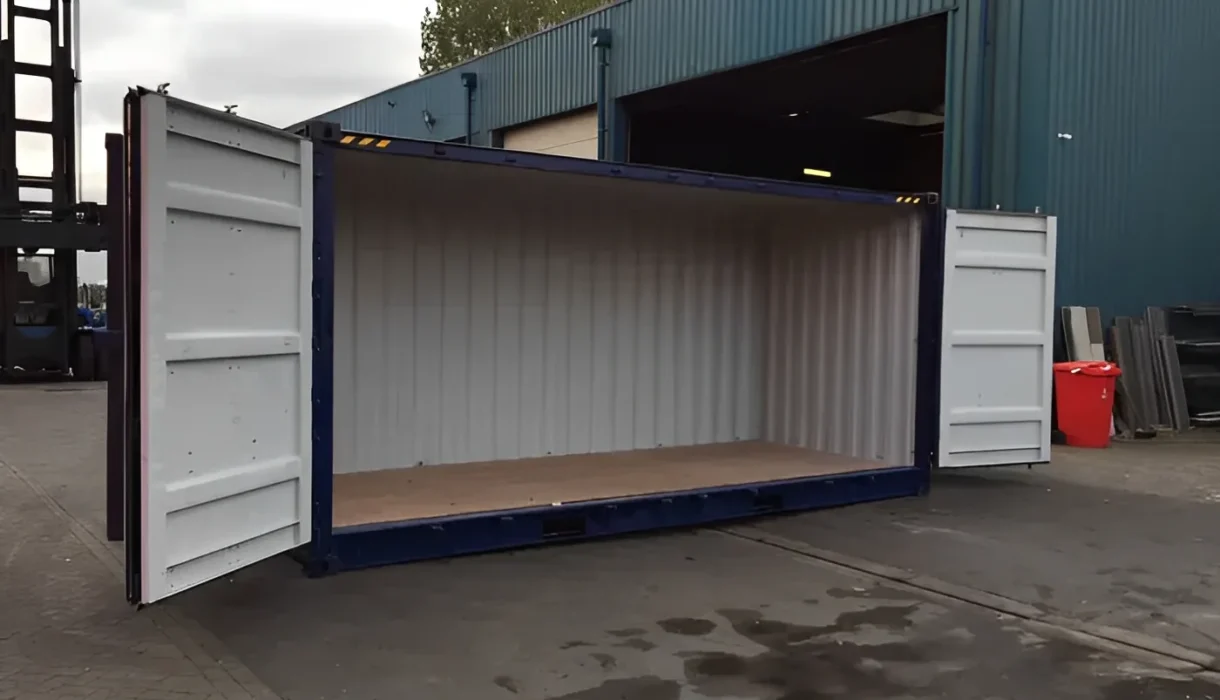

A high cube shipping container is a standard container with roughly one extra foot of height. Everything else is the same: same width, same length options, same doors at one end, same corner castings, same handling equipment. The only change is that the walls are about 300mm taller.
That sounds trivial. In practice it is the difference between a container you can insulate, line and stand up in comfortably, and one where the ceiling sits close enough to your head that people notice.
This guide covers exactly what the extra height gives you, where it costs you, and when the standard box is the better purchase.
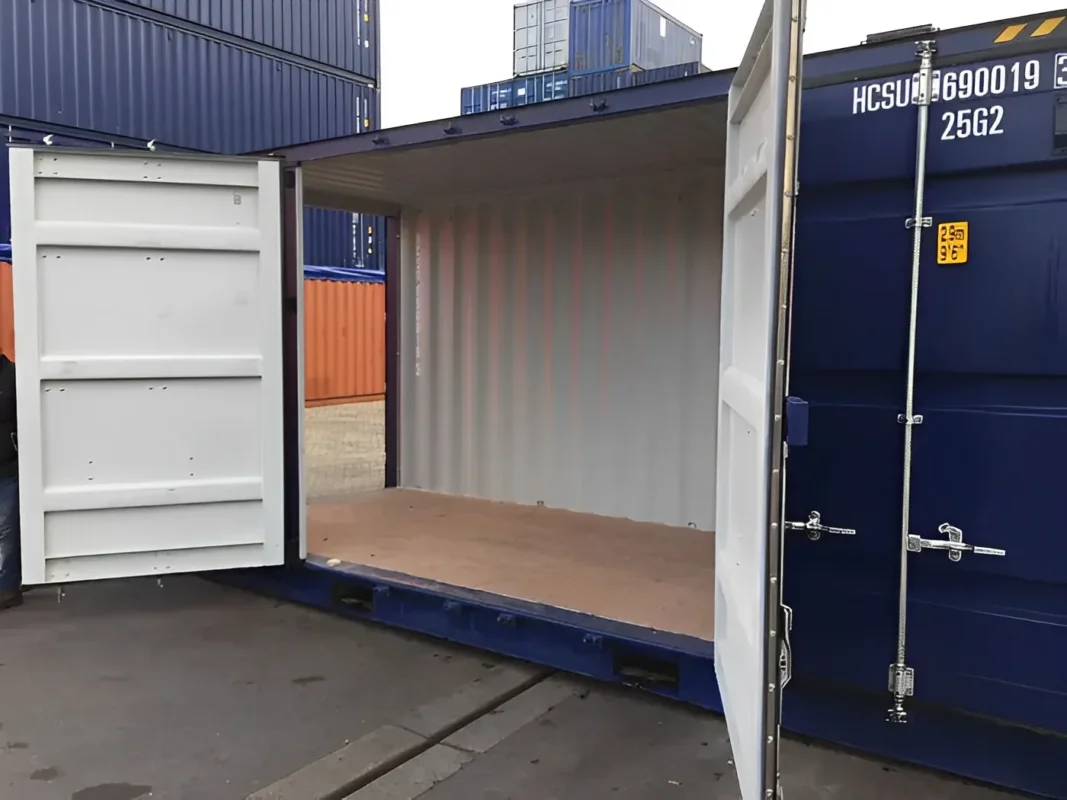
The measurements
Both are built to ISO standards, so these figures hold across the market.
Standard height, 20ft and 40ft:
- External height: 2.591 m
- Internal height: 2.350 m
- Door opening: 2.280 m wide x 2.260 m high
- 20ft volume: 32.85 m³. 40ft volume: 66.83 m³
High cube, 20ft and 40ft:
- External height: 2.895 m
- Internal height: 2.650 m
- Door opening: 2.280 m wide x 2.560 m high
- 20ft volume: 37.09 m³. 40ft volume: 75.32 m³
The external width of 2.438 m and the internal width of 2.330 m are identical on both. So is the door width. If your problem is that something is too wide, a high cube does nothing for you.
What you gain is 300mm of internal height and 300mm of door opening height, which works out at roughly 13 percent more usable volume. On a 40ft that is 8.5 cubic metres of extra space.
Why 300mm matters once you fit it out
An empty standard container has 2.35 m of headroom. That is generous. Nobody walks into a bare 20ft and thinks it is cramped.
The problem starts when you build inside it.
A typical insulated fit-out loses height at both the floor and the ceiling. Insulation and a finished ceiling take perhaps 100 to 150mm, more if you are running services, ducting or lighting in the void. A raised or insulated floor takes another 50 to 100mm. Work with 150mm off the top and 75mm off the bottom and a standard container finishes at around 2.12 m of clear internal height.
That is below the ceiling height of most rooms people are used to. It is legal, it is workable, and it feels low. Taller occupants will be close to the light fittings.
Do the same fit-out in a high cube and you land near 2.42 m. That reads as a normal room.
This is the main reason container offices, welfare units, studios, gyms, clinics and anything people spend hours inside are usually built from high cubes. If you are buying a container to convert into a space for people, start with the high cube. The price difference is small next to the fit-out cost, and you cannot add height later.
Stacking pallets
For storage, the extra height converts directly into a second or third tier.
A loaded Euro pallet at around 1.1 m tall stacks two high at 2.2 m, which fits a standard container with 150mm to spare. Push the load height to 1.2 m and two pallets come to 2.4 m, which does not fit a standard container but sits comfortably in a high cube.
Lower loads show the same pattern. Three tiers at 850mm each come to 2.55 m: too tall for a standard, fine for a high cube.
The practical test is simple. Measure your actual loaded pallet height, multiply by the number of tiers you want, add 50mm of clearance for handling, and compare against 2.35 m and 2.65 m. If the answer lands between those two numbers, the high cube pays for itself immediately and the standard container wastes a tier.
Racking behaves the same way. An extra 300mm is often one more shelf level down the full length of the container.
The door opening
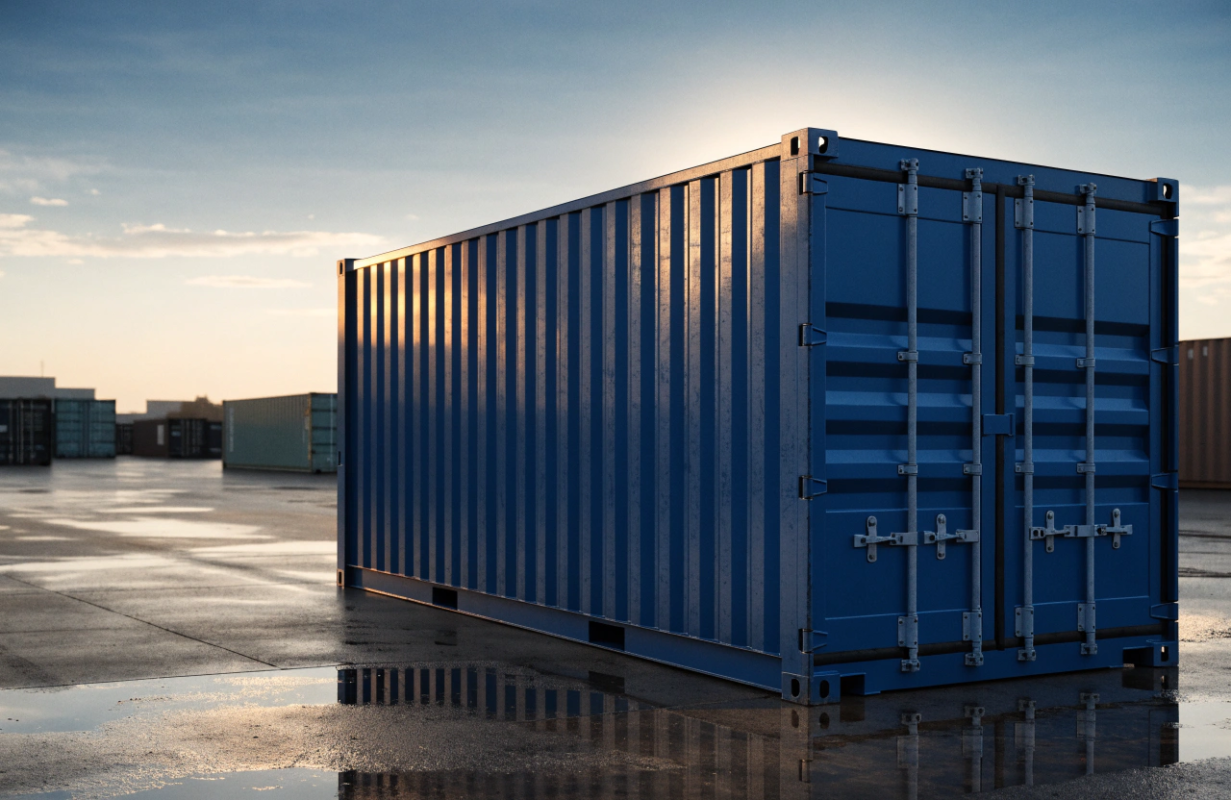
The door opening height goes from 2.260 m on a standard to 2.560 m on a high cube. The width stays at 2.280 m on both.
That 300mm decides whether some things can get in at all. A forklift carrying a pallet at mast height, a scissor lift, a compact excavator with the cab up, tall racking delivered assembled, a ride-on mower with a roll bar. Anything near 2.3 m tall will not pass through a standard container door.
Measure the tallest thing you intend to drive or push through the doors, not the tallest thing you intend to store. Items can often be laid down or lowered once inside. Getting them through the opening is the constraint.
Transport and clearance consequences
The extra height follows the container everywhere it goes, and this is where high cubes cost you.
Delivery is by tilt bed or roll-off truck. You need roughly 18 metres of clear straight approach for a 20ft and 30 metres for a 40ft, around 3.6 metres of width, and around 4.2 metres of overhead clearance. That overhead figure is for a standard container on a standard bed. A high cube adds 300mm to it.
Check for:
- Gateways and archways. A 3 metre arch that passes a standard container will not pass a high cube on a bed.
- Tree branches along the approach. The most common cause of a failed delivery.
- Overhead cables. Both private supply lines and street lighting arms.
- Canopies, car park entrances and covered loading bays.
- Height restrictions on the route, which are the haulier’s problem but become a longer journey and a higher price.
If you plan to stack containers, the height compounds. Two high cubes stand at 5.79 m against 5.18 m for two standards, which can matter for planning consent, sight lines or a roof you are working under.
Tell your supplier it is a high cube when you discuss delivery. Do not assume the access survey covers the extra 300mm.
What it costs
Published European starting prices in 2026 put a used 40ft high cube from around €2,325 against a used 40ft standard from around €2,025. New 40ft high cubes start near €3,425 against around €3,125 for the standard. Read those as market floors rather than delivered prices.
The pattern across the market is a premium of roughly €300 on a 40ft. Against the 8.5 cubic metres of extra volume, that is cheap capacity. If you need the height, the high cube is comfortably worth it.
One note on availability. 40ft high cubes are extremely common because most modern deep sea container fleets use them. 20ft high cubes are much less common, because 20ft containers are usually built to standard height. Expect a narrower choice, a longer wait and a proportionally larger premium on a 20ft high cube.
When the standard container is the better buy
The high cube is not automatically the right answer. Choose standard when:
- Access is height-limited. If the container has to pass under an arch, a canopy or a branch you cannot remove, the decision is made.
- You are storing at floor level only. Machinery, vehicles, long materials, single-tier pallets. You would be paying for volume you never use.
- The container is not being converted. No insulation, no ceiling, no fit-out means no lost headroom, and 2.35 m is plenty.
- You want a 20ft. Availability and price both favour the standard height at this size.
- Planning height is tight. Some sites have a height limit that a high cube breaches and a standard does not.
- You may want to stack later. Mixing heights in a stack is awkward, so match what you already have.
Further reading
- ISO 668:2020, the standard that fixes container classification, dimensions and ratings (ISO)
- The key ISO container standards, summarised (Bureau International des Containers)
Deciding
Three questions settle it.
Will people work inside it for more than short periods, with a ceiling and insulation fitted? Take the high cube. Will you stack goods above 2.3 m or push anything tall through the doors? Take the high cube. Is there anything at all between the road and the final position that is under about 4.5 metres? Take the standard, or solve the clearance first.
If none of those apply, buy the standard container and put the difference towards delivery or groundwork.
You can compare heights and current pricing on our standard container range, or see what the extra headroom allows on our container office pages. Tell us about the site and the access and we will come back with a written quotation.
When a high cube shipping container is worth the extra cost
Pay for the extra height when you are stacking pallets two high, fitting a lining and a ceiling, or working on your feet inside the unit. Skip it when the load is low and the budget is tight. We stock both, so tell us the headroom you need.