How to Choose the Right Shipping Container for Storage, Business or Construction
Posted in :

Most container buying guides treat the decision as one problem with one answer. In practice there are three. A farmer storing feed, a coffee operator fitting out a unit for a public square, and a contractor kitting out a compound are all buying a steel box, and almost nothing else about their decisions overlaps.
Our general guide to choosing the right shipping container covers the questions everyone has to answer: size, duration, access, whether it holds things or people. This piece assumes you have done that and splits the decision three ways by application.
Find your section. The criteria in the other two matter less than you think.
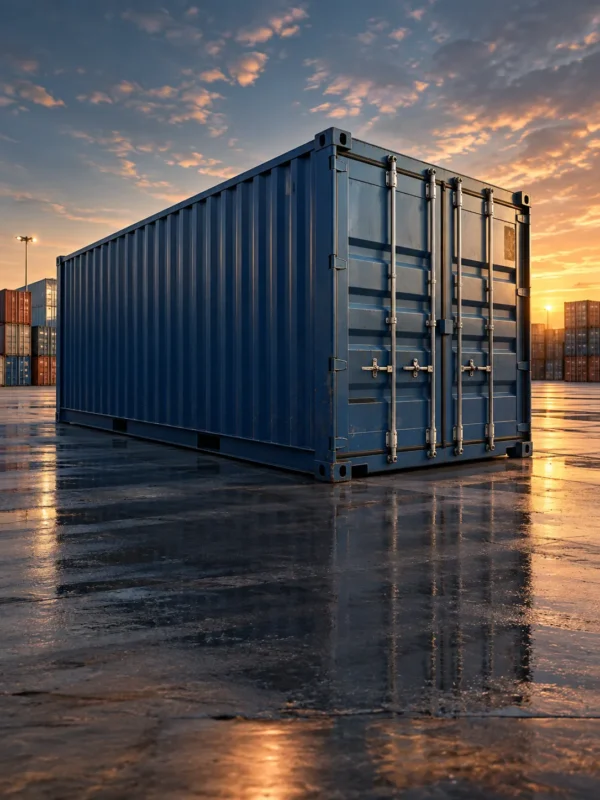
Buying for storage
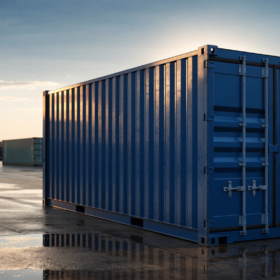
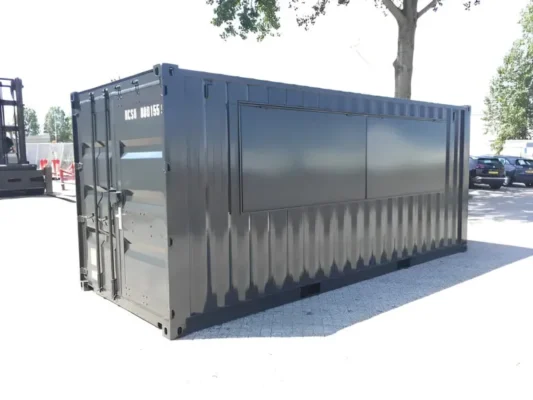
Storage is the easiest case to get right, because the requirement is narrow. The unit has to keep your things secure, dry and accessible for as many years as possible, for as little money as possible.
Condition and what it costs per year
The instinct is to buy the cheapest unit. The better calculation is cost per year of service.
| Option | Published starting price | Typical remaining life | Cost per year |
|---|---|---|---|
| 20ft used | from ~€1,125 | 15 to 20 years | ~€56 to €75 |
| 20ft new, one trip | from ~€1,725 | 25 to 30 years | ~€58 to €69 |
| 40ft used | from ~€2,025 | 15 to 20 years | ~€101 to €135 |
| 40ft new, one trip | from ~€3,125 | 25 to 30 years | ~€104 to €125 |
Those are published European market ranges for 2026, not quotations, and the per-year figures are simple division. The point stands: over a full service life, new and used cost roughly the same per year. New costs 30 to 50 percent more up front and lasts proportionally longer.
So the answer depends on your horizon. If you need storage for five years, buy used. You will never use the extra decade you paid for. If the container becomes a permanent part of your yard, new is not the extravagance it looks like.
Dryness beats everything else
The most common complaint from storage buyers is not theft. It is damp contents, and the cause is almost always condensation rather than a leak.
A steel box cools fast overnight. Warm, moist air inside meets cold steel, water forms on the underside of the roof and runs down the walls. It happens in a perfectly watertight container.
What to check and specify:
- Roof condition. Look along the roof from above. A patch of standing water means a dent, and dents rust through first.
- Vents. Factory vents at the top of each side are the minimum. More vents help.
- Floor. Look for delamination, soft patches and signs of previous flooding.
- Door seals. Close the doors from inside and look for daylight around the gaskets.
- Insulation or anti-condensation coating if the contents are sensitive: documents, electronics, textiles.
Security
Standard cargo doors with four vertical locking bars are already difficult to defeat. The weakness is the padlock, so a lock box, a steel shroud welded over the padlock, is the most cost-effective addition you can make to a storage container.
Orientation helps too. Position the doors facing a wall or a fence with just enough clearance to open them. Someone who cannot stand square to the doors cannot work on them.
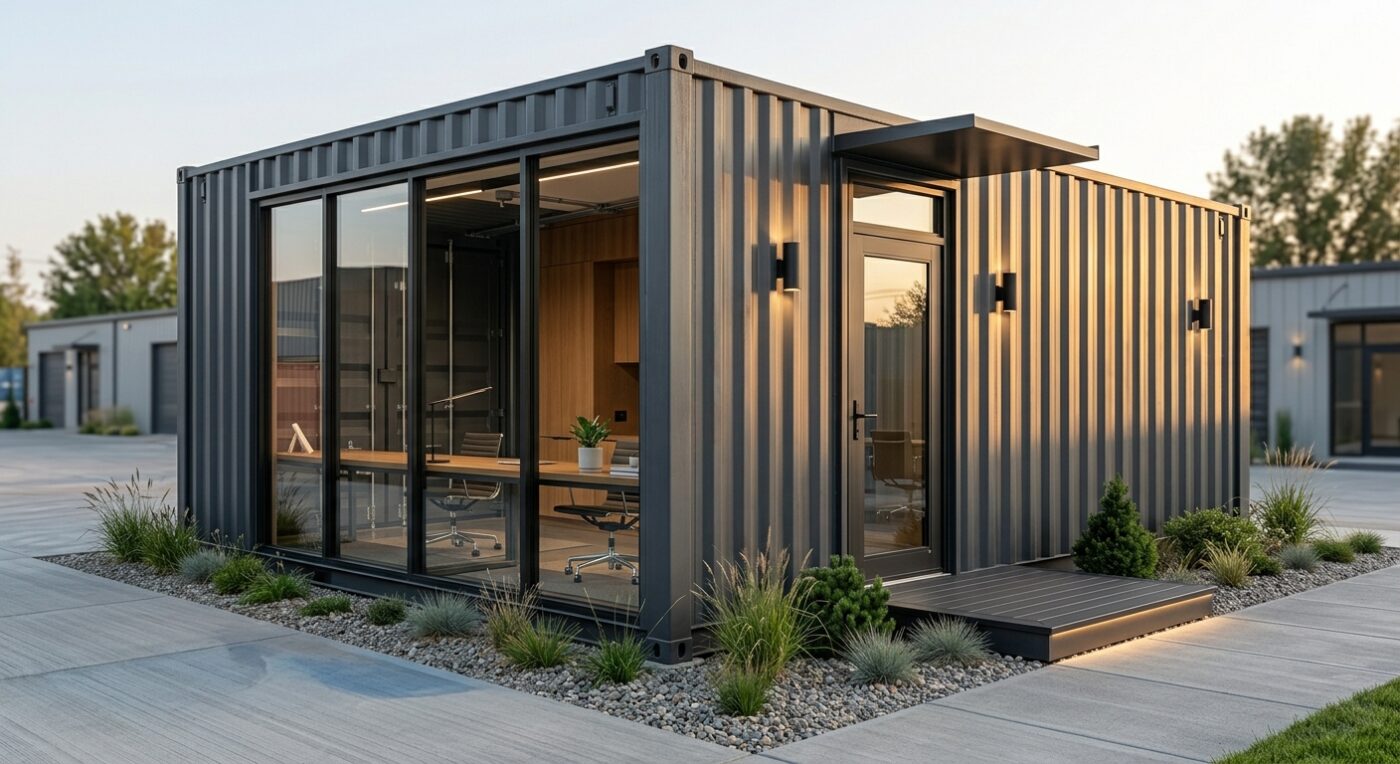
Buying for business and customer-facing use
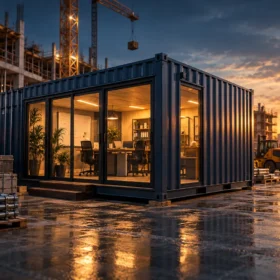
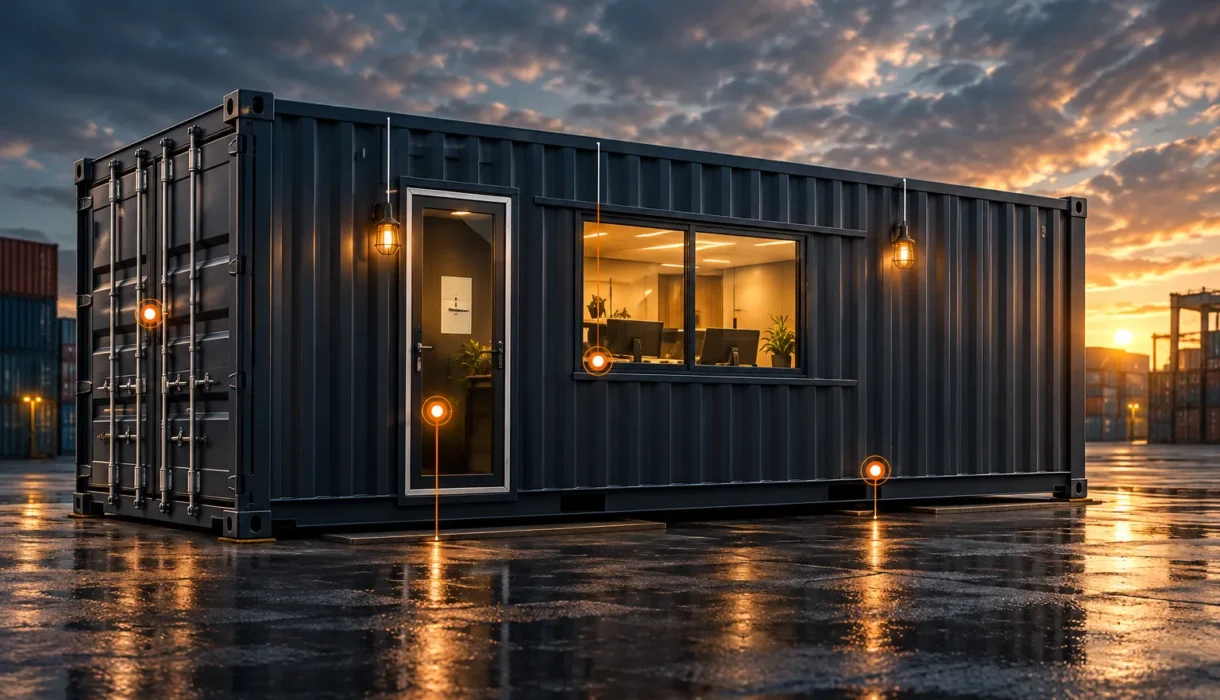
If the public, clients or staff will see or enter the unit, the criteria change completely. Cost per year stops being the main number. How the unit looks and how it performs as a building take over.
Appearance is a specification, not an afterthought
A used container looks used: mismatched paint patches, old shipping line branding showing through the topcoat, dents along the side panels, surface rust at the welds. On a fenced yard none of that matters. On a forecourt or a public street it is the first thing anyone sees.
Your realistic options:
- A new, one trip unit. Uniform colour, clean panels, no history. The simplest route to something that looks deliberate.
- A used unit, shot-blasted and repainted. Cheaper than new and it can look excellent. Ask to see the unit before it is painted, because fresh paint conceals dents well.
- External cladding. Timber or composite over the corrugations, at a published market range of €2,300 to €5,800. It is what makes the unit look like a building rather than a container, which is sometimes what a planning officer or a landlord wants.
Finish, and what people notice from the inside
Inside, the details people notice are cheap to get right and expensive to fix later: where the lighting sits, whether the floor looks like a floor, whether the door closes cleanly, whether the space is warm in winter and tolerable in August.
Insulation is the item to spend on. A well-insulated unit is quiet, holds temperature and does not condense. An uninsulated one is uncomfortable within twenty minutes, and no amount of finish disguises that.
Compliance is a local question
This is where customer-facing projects go wrong. Planning permission, building regulations, fire requirements, accessibility, food hygiene and trading rules all vary by country and often by municipality. There is no European answer, and no supplier can tell you what applies at your address.
Ask your local authority before you order, not after:
- Is the unit treated as a temporary structure, a permanent building, or neither?
- Does public access trigger requirements that storage would not?
- Do fire, accessibility or sanitation regulations apply?
- Are there rules on external appearance or distance from a boundary?
- Does time on site change any of the answers?
Get those answers first. A specification change on a drawing is free. The same change to a finished unit is not. If the project needs a particular arrangement of openings, partitions or services, you are buying a modified container rather than a standard unit with extras added.
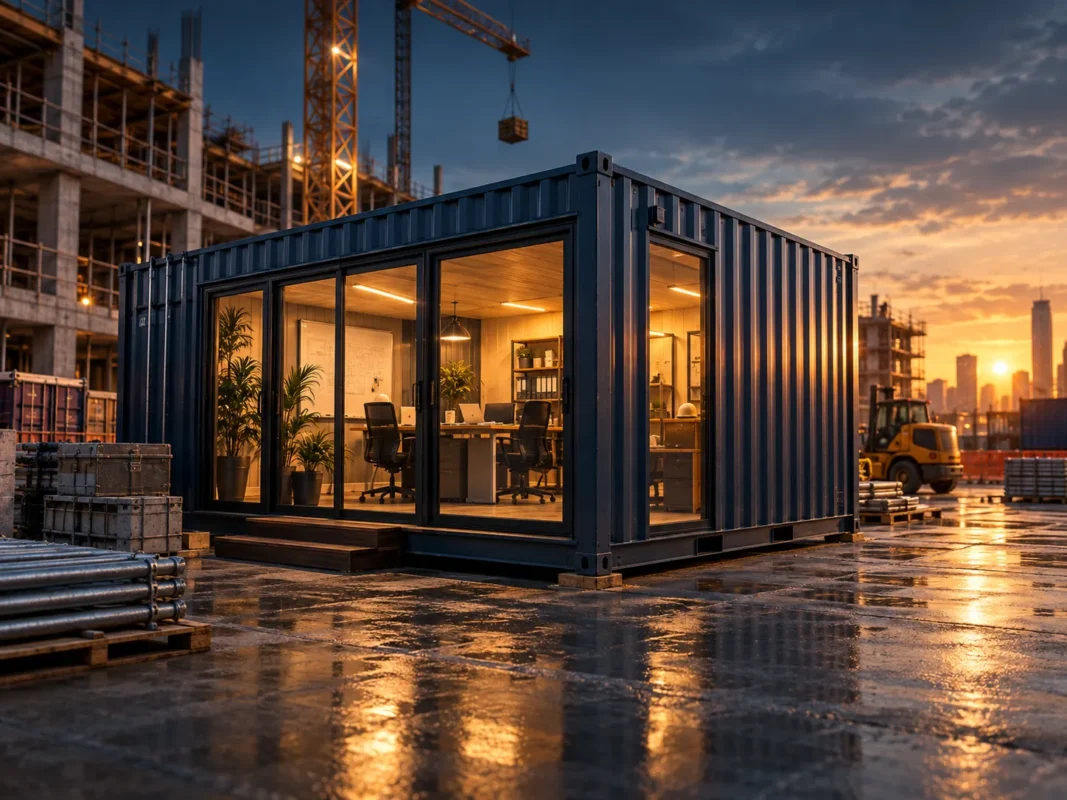
Buying for construction sites
Construction buyers have a different problem again. The unit will be abused, it will be a target, it has to keep people fed and dry, and it will move.
Durability and theft resistance
Plant reverses into things. Materials get dragged out. The unit sits empty and unwatched every weekend. What matters:
- Buy used, and buy structurally sound. Cosmetic condition is irrelevant here. Frame, floor and doors are not. A sound 15 year old container is the right purchase.
- Lock box, always. Plus a closed shackle padlock rated for the job.
- Check the floor for point loads. Plant, generators and pallets of blocks concentrate weight. A container floor that is already soft will fail under them.
- Anti-vandal doors on office and welfare units. Steel shutters over windows are standard for a reason.
- Position the unit where it is overlooked, and face the doors into the compound rather than towards the boundary.
Welfare
Welfare requirements for construction sites are set nationally and differ across Europe, so check what applies in your country before you decide how many units you need. What is consistent everywhere is that the requirement exists, it scales with headcount and project duration, and it is enforced.
Work out your numbers before you buy rather than discovering mid-project that one unit cannot cover drying, eating and washing for the crew you actually have. Published market ranges put a WC and sink fit-out at €1,700 to €4,600 and air conditioning or heat recovery ventilation at €1,700 to €3,500, so a properly equipped welfare unit is a real line in the budget.
Relocating between sites
This is the criterion construction buyers most often skip, and it costs them on the second move.
Specify for relocation from the start:
- Keep services simple. Anything plumbed or hard-wired has to be disconnected and reconnected every move. A unit fed by a single plug-in connection moves in an afternoon.
- Avoid fixed external additions. Steps, decking and canopies that bolt to the ground rather than the container become a job every time.
- Fix internal fittings properly. Furniture and equipment that is not secured moves during transit and arrives damaged.
- Buy 20ft rather than 40ft where the work allows it. A 20ft needs around 18 m of clear approach against 30 m for a 40ft. Over a dozen different site compounds, that difference decides how many of them you can actually get a unit into.
- Keep the CSC plate valid if the unit will ever travel by sea or be handled as freight.
Comparing the three
| Storage | Business | Construction | |
|---|---|---|---|
| Usual condition | Used | New or repainted | Used, sound |
| First priority | Dry and secure | Appearance and comfort | Durability and security |
| Spend the extra on | Lock box, vents | Insulation, finish, cladding | Anti-vandal fittings, welfare |
| Biggest risk | Condensation | Local compliance | Relocation cost |
Is it holding things or holding people?
This one question splits the market in half. If the answer is things, you are looking at a standard shipping container. Stock, materials, tools, plant, seasonal overflow, and site equipment. A standard container is steel, lockable, and weatherproof, and it will sit outdoors in a working environment without much attention. For pure storage it is almost always the most cost-effective answer. If the answer is people, you are looking at an office shipping container. Somewhere to run a site from, hold a conversation, do paperwork, or get out of the weather. The difference is not cosmetic: a unit intended to be worked in is set up differently from one intended to be filled up. If the honest answer is both, in a specific arrangement—a workshop with a small office at one end, a serving unit with a counter, and a store with a door in an awkward place—you are into modified containers.Does it stay put, or does it move?
A container that is craned into a yard and stays there for a decade is a different purchase from one that follows a project team from site to site every few months. If it moves, say so early. It affects how the unit should be specified, how it should be fitted out, and what is sensible to build into it. Anything plumbed, wired, or bolted down is a consideration every time the unit is lifted. Relocatable units are entirely normal—they just need to be planned as relocatable from the start rather than adapted later.How long does it need to last?
A container for a six-month project and a container that becomes part of your permanent yard are different decisions, and it is worth being honest with yourself about which one you are making. Short-horizon needs generally reward simplicity. Long-horizon needs reward spending a little more up front on the things that are painful to change later—the position of the doors, the internal layout, how it handles condensation, and how it is secured.Further reading
- ISO 668:2020, the standard that fixes container classification, dimensions and ratings (ISO)
- International Convention for Safe Containers, the treaty behind the CSC plate (IMO)
Where to start
Write down which of the three you are, what goes in the unit, how long it stays, and whether it moves afterwards. Four lines is enough for any competent supplier to quote accurately, and enough to stop you buying a specification that belongs to a different application.
You can compare specifications across the container range, or describe the job to us and we will tell you which specification fits before we quote anything.